
Monday, May 28, 2007


Sunday, May 13, 2007
A friend indeed
I have known him for several years now. He is an old friend of my brother's and that is how we got introduced, when I returned to live with my family, after completing my post-graduate degree. We seemed to hit it off rather well from the first meeting onwards and have been good friends ever since.
My mother has named him Zakhmi (the injured one) and the name has stuck, because he tends to get into fights every now and then and, in which, often, he is out-numbered many to one. The injuries sustained are serious at times and he has almost moved on to the 'happy hunting grounds' on more than one occasion. It took a really long time for a particularly deep wound on his neck, which was the result of a rather nasty confrontation, I suppose, to heal. My brother and I washed it with anti-septic solution every day and a kind gentleman down the street fed him anti-biotics.
Coming from a clan of warrriors, myself, I can perfectly understand his compulsion to stand up for what he believes is right, even though the prospect of losing a dear friend is certainly not a good one.
By the grace of the Almighty, he is doing fine till now and bears the scars of battle with pride.
When Zakhmi was younger, my brother had bestowed upon him the title of 'the playful one', for whenever he would spot my brother or I, he would come running and repeatedly raise one of his front-paws, in a gesture that sought to communicate the fact that he wanted to play with us.
Though born on the street and still living there, he is smarter than most dogs I have known. He seems to understand perfectly whatever my mother says to him in chaste Punjabi and acts accordingly. On the other hand, if he has something to say to any of us, he is, generally, able to convey that through his actions, without much difficulty.
The colour of his coat is the same as that of a lion and he has a very regal bearing. He walks or trots in a fashion, which seems to suggest that he was either a member of a royal family or a soldier of high rank, in a previous birth. Even in this life, I think he would have made an excellent police or military dog, had he been given the chance, and marched smartly in parades, with his unit or battalion .
He does not pick up food thrown in front of him and eats only when fed by hand. His self-respect, obviously, is of paramount importance to him.
Being the large-hearted 'gentleman' (or should I say 'gentledog'?) that he is, he cares a lot for his friends. He amply demonstrated this quality of his, when my beloved Tinkoo died and he was the first to offer me a shoulder to cry upon.
More recently, I developed a huge boil on my left knee that became septic, causing it to fill up with a lot of pus. The resultant pain made it difficult for me to stand up or even sit straight for an extended period of time. The three or four steps required to be taken to go to the toilet adjacent to my room seemed to be one of the longest journeys I have ever embarked upon. So, I was unable to venture outside for several days and this must have caused Zakmi to become worried, for he decided to visit me to ask after my health.
One evening, he came to our front door and started scratching it with his nails. When my mother opened the door, he simply rushed past her and came straight to my bed-side. After getting his ears scratched and head patted for a while, he went away, as quickly as he had come. This sequence continued to be repeated daily, over the next few days, until I had recovered fully.
His visits were the highlights of my day and I looked forward to seeing him.
I feel blessed to have him as a friend!
My mother has named him Zakhmi (the injured one) and the name has stuck, because he tends to get into fights every now and then and, in which, often, he is out-numbered many to one. The injuries sustained are serious at times and he has almost moved on to the 'happy hunting grounds' on more than one occasion. It took a really long time for a particularly deep wound on his neck, which was the result of a rather nasty confrontation, I suppose, to heal. My brother and I washed it with anti-septic solution every day and a kind gentleman down the street fed him anti-biotics.
Coming from a clan of warrriors, myself, I can perfectly understand his compulsion to stand up for what he believes is right, even though the prospect of losing a dear friend is certainly not a good one.
By the grace of the Almighty, he is doing fine till now and bears the scars of battle with pride.
When Zakhmi was younger, my brother had bestowed upon him the title of 'the playful one', for whenever he would spot my brother or I, he would come running and repeatedly raise one of his front-paws, in a gesture that sought to communicate the fact that he wanted to play with us.
Though born on the street and still living there, he is smarter than most dogs I have known. He seems to understand perfectly whatever my mother says to him in chaste Punjabi and acts accordingly. On the other hand, if he has something to say to any of us, he is, generally, able to convey that through his actions, without much difficulty.
The colour of his coat is the same as that of a lion and he has a very regal bearing. He walks or trots in a fashion, which seems to suggest that he was either a member of a royal family or a soldier of high rank, in a previous birth. Even in this life, I think he would have made an excellent police or military dog, had he been given the chance, and marched smartly in parades, with his unit or battalion .
He does not pick up food thrown in front of him and eats only when fed by hand. His self-respect, obviously, is of paramount importance to him.
Being the large-hearted 'gentleman' (or should I say 'gentledog'?) that he is, he cares a lot for his friends. He amply demonstrated this quality of his, when my beloved Tinkoo died and he was the first to offer me a shoulder to cry upon.
More recently, I developed a huge boil on my left knee that became septic, causing it to fill up with a lot of pus. The resultant pain made it difficult for me to stand up or even sit straight for an extended period of time. The three or four steps required to be taken to go to the toilet adjacent to my room seemed to be one of the longest journeys I have ever embarked upon. So, I was unable to venture outside for several days and this must have caused Zakmi to become worried, for he decided to visit me to ask after my health.
One evening, he came to our front door and started scratching it with his nails. When my mother opened the door, he simply rushed past her and came straight to my bed-side. After getting his ears scratched and head patted for a while, he went away, as quickly as he had come. This sequence continued to be repeated daily, over the next few days, until I had recovered fully.
His visits were the highlights of my day and I looked forward to seeing him.
I feel blessed to have him as a friend!
Friday, May 04, 2007
Saanjha Virsa PunjabiaaN Da (The Shared Heritage of Punjabis)


A magazine is to be published in the Punjabi language, every quarter, simultaneously from Lahore, Punjab, Pakistan and Ludhiana, Punjab, India. The Lahore edition is to be printed in the Shahmukhi script and the Ludhiana edition in Gurmukhi. The content of both editions, obviously, is to be exactly the same.
This is the first such experiment that I am aware of and I sincerely hope that it would not only be successful in terms of the magazine becoming immensely popular, but also achieve its larger goal of bringing Punjabis, wherever in the world they might reside, closer to each other.
I came to know about it when the Academy of the Punjab in North America asked permission to include, in the first issue, my blog-posts about my Pakistan trip, granting which, was, of course, a great honour for me. They even had it all translated into Punjabi, on their own.
The magazine is to be called Sanjh, which is very appropriate as it seeks to preserve and promote the glorious language, culture and heritage that all Punjabis share.
This is the first such experiment that I am aware of and I sincerely hope that it would not only be successful in terms of the magazine becoming immensely popular, but also achieve its larger goal of bringing Punjabis, wherever in the world they might reside, closer to each other.
I came to know about it when the Academy of the Punjab in North America asked permission to include, in the first issue, my blog-posts about my Pakistan trip, granting which, was, of course, a great honour for me. They even had it all translated into Punjabi, on their own.
The magazine is to be called Sanjh, which is very appropriate as it seeks to preserve and promote the glorious language, culture and heritage that all Punjabis share.
Thursday, April 12, 2007
I am a Himesh Reshammiya fan!
Before any one jumps to any conclusions, let me clarify that I do not care much for Himesh's nasal twang. I think he does a fine job as a composer though, especially when the vocals are being rendered by others.
Here is one recent such example, which I like quite a bit:
The singers are Raahat Fateh Ali Khan and Krishna.
Here is one recent such example, which I like quite a bit:
The singers are Raahat Fateh Ali Khan and Krishna.
Friday, April 06, 2007
A Reason to Smile
The following 'middle' appeared on the editorial page of The Tribune, yesterday:
We went to Lahore recently for an ILO sponsored five-nation meet on child labour. My wife came along. She is Lahore born, 7 Club Road to be precise, which turned out to be a rather prestigious address, being the official residence of the Punjab Chief Minister.
Suddenly, I had an idea. Why not drop in at 7, Club Road, to see what it was like? Without a warning to anybody, we took off in the car provided to me by the State Government, our police escort dutifully behind. When we drew up at the bungalow around 11.00 p.m. its gates were closed. The police van sounded its hooter, and the guards opened up. We parked inside, stood on the lawns, silently took in the scene before us, and left.
On day 2, my wife and I went over to Zaidi’s, a famous photographer located at 23, Mall Road. My parents’ post-wedding photograph was taken by the late Syed Mohd. Ali there. The establishment, which first set up shop in Allahabad way back in 1904, is now owned by his son, Shahid Zaidi.
We were met by his shagird, one Mr Yunus, who surprised us by rolling out the old records and, voila, there was my dad’s name in one of his registers which showed that the photograph adorning our drawing room in New Delhi was clicked by Zaidi’s in Mall Road, Lahore, on March 12, 1945, a month and a half after their wedding in Hardwar.
Here I was examining it under a lamp, on November 21, 2006. On an impulse, I asked Mr Yunus whether he could take a snap of ours. When he heard of the connection with my parents’ photograph, he suggested we could go to the Gulberg Shop “where Shahid Saheb sits”, but we said, no, it had to be the same place on Mall Road! So he took us inside, and with great professional ease, snapped us in about a dozen postures.
On Thursday, my wife went and selected the print of our photograph at Zaidi’s, with the promise to pick it up on Friday at 5 pm on our way to the airport to catch the return flight to Delhi.
At 5 we were back to Zaidi’s. Yunus Saheb gave us our framed photograph, and when we asked how much, he said it was complimentary, ‘‘on instructions of Shahid Saheb”. I then requested him to connect me to his owner in Gulberg, and when he came on the line, I thanked him for his gesture, and told him I was leaving a token of my feelings for him - an Indian silk tie and a packet of Darjeeling tea.
I also told him that, maybe, a day would come when my daughter would land up at his establishment on the Mall with her husband, for yet another takeaway to complete the picture, if that is the expression.
Thank you, Shahid Saheb, for rekindling my past, and for holding an opportunity for my daughter in the future.
From Zaidi, with love
by K.M. Sahni
We went to Lahore recently for an ILO sponsored five-nation meet on child labour. My wife came along. She is Lahore born, 7 Club Road to be precise, which turned out to be a rather prestigious address, being the official residence of the Punjab Chief Minister.
Suddenly, I had an idea. Why not drop in at 7, Club Road, to see what it was like? Without a warning to anybody, we took off in the car provided to me by the State Government, our police escort dutifully behind. When we drew up at the bungalow around 11.00 p.m. its gates were closed. The police van sounded its hooter, and the guards opened up. We parked inside, stood on the lawns, silently took in the scene before us, and left.
On day 2, my wife and I went over to Zaidi’s, a famous photographer located at 23, Mall Road. My parents’ post-wedding photograph was taken by the late Syed Mohd. Ali there. The establishment, which first set up shop in Allahabad way back in 1904, is now owned by his son, Shahid Zaidi.
We were met by his shagird, one Mr Yunus, who surprised us by rolling out the old records and, voila, there was my dad’s name in one of his registers which showed that the photograph adorning our drawing room in New Delhi was clicked by Zaidi’s in Mall Road, Lahore, on March 12, 1945, a month and a half after their wedding in Hardwar.
Here I was examining it under a lamp, on November 21, 2006. On an impulse, I asked Mr Yunus whether he could take a snap of ours. When he heard of the connection with my parents’ photograph, he suggested we could go to the Gulberg Shop “where Shahid Saheb sits”, but we said, no, it had to be the same place on Mall Road! So he took us inside, and with great professional ease, snapped us in about a dozen postures.
On Thursday, my wife went and selected the print of our photograph at Zaidi’s, with the promise to pick it up on Friday at 5 pm on our way to the airport to catch the return flight to Delhi.
At 5 we were back to Zaidi’s. Yunus Saheb gave us our framed photograph, and when we asked how much, he said it was complimentary, ‘‘on instructions of Shahid Saheb”. I then requested him to connect me to his owner in Gulberg, and when he came on the line, I thanked him for his gesture, and told him I was leaving a token of my feelings for him - an Indian silk tie and a packet of Darjeeling tea.
I also told him that, maybe, a day would come when my daughter would land up at his establishment on the Mall with her husband, for yet another takeaway to complete the picture, if that is the expression.
Thank you, Shahid Saheb, for rekindling my past, and for holding an opportunity for my daughter in the future.
Saturday, March 31, 2007
Violation of Sikhism's Basic Tenets
The following is the text of the letter that I sent through email to the Shiromani Gurdwara Parbandhak Committee (SGPC), a few months ago, and to which neither has a reply been sent, nor has the practice that I wrote to protest against been stopped:
"Sat Sri Akal,
I would very humbly like to bring to your attention something, which I have noticed and found very perturbing.
The daily Ardas at the Harmandir Sahib, in the evenings, after the recitation of the Rehraas Sahib, in its last stanza, addresses 'Dhan Dhan Sri Guru Ram Das Sahib ji' and 'Dhan Dhan Sri Guru Granth Sahib ji' but makes no mention of 'Sachche Pita Waheguru'.
I am no learned scholar and am just an ordinary Sikh, but to my mind this does not appear to be in line with the teachings of the ten Gurus as well as the Guru Granth Sahib.
From what I understand, we remember all the ten Gurus as well as the Guru Granth Sahib in the very first stanza of the Ardas, and the final stanza is addressed to 'Sachche Pita Waheguru', the Supreme Being.
I sincerely hope that you will look into the matter at the earliest possible and decide upon the appropriate course of action.
Waheguru ji ka khalsa, Waheguru ji ki fateh!"
"Sat Sri Akal,
I would very humbly like to bring to your attention something, which I have noticed and found very perturbing.
The daily Ardas at the Harmandir Sahib, in the evenings, after the recitation of the Rehraas Sahib, in its last stanza, addresses 'Dhan Dhan Sri Guru Ram Das Sahib ji' and 'Dhan Dhan Sri Guru Granth Sahib ji' but makes no mention of 'Sachche Pita Waheguru'.
I am no learned scholar and am just an ordinary Sikh, but to my mind this does not appear to be in line with the teachings of the ten Gurus as well as the Guru Granth Sahib.
From what I understand, we remember all the ten Gurus as well as the Guru Granth Sahib in the very first stanza of the Ardas, and the final stanza is addressed to 'Sachche Pita Waheguru', the Supreme Being.
I sincerely hope that you will look into the matter at the earliest possible and decide upon the appropriate course of action.
Waheguru ji ka khalsa, Waheguru ji ki fateh!"
Thursday, March 22, 2007
Google's Gaffe
Over the past seven years, since I stepped out of college, I have realised that here in India, at least, the most important requirement for being selected for any job is 'good communication skills'. It does not really matter if the position in question is Rocket Scientist or Software Developer or Business Manager or Salesperson. The chief criterion remains the same.
It does not really matter if a candidate for the position of Rocket Scientist knows little about Rocket Science or if the one who wishes to be selected as a Software Developer is not too well versed with the tools of his or her trade or if the aspiring Business Manager does not know too much about Business Management or if the one who wishes to become a Salesperson for a B2B (business-to-business) IT (information technology) solution has sold only carpets in the past, as long as they all have 'good communication skills'.
The question now arises as to how do companies identify those with 'good communication skills'. It is quite simple really. Any one who uses two hundred words where twenty would suffice, with a fancy term, a 'buzz-word' thrown in here and there, is obviously 'the one' (a la the Matrix series!). It is almost needless to add that the ability to make a mountain out of a molehill encompasses the capacity to lie through one's teeth.
Later, these people are described as 'dynamic', 'proactive', 'go-getters', etc., and move up the corporate ladder, less on the basis of any concrete results they might have been able to achieve during their tenure with the organisations employing them, than on account of the visually appealing Power Point presentations they prepare and, once again, knowing where to drop in a buzz-word during the course of glib talk that is passed off as corporate discussion.
Coming to think of it, at least some of this happens overseas, as well, and even has serious repercussions, as is evident from the dot-com bubble burst in the US, when millions of dollars went down the drain because the money-bags, also known as investors, poured funds wherever 'dynamic', 'proactive', 'go-getters' with 'good communication skills' asked them to, after being suitably impressed by the castles they built in the air through their fancy presentations.
Closer to home, the shenanigans of these 'star performers' have led to the cancellation of call-centre contracts worth hundreds of millions of dollars by companies like Lehman Brothers, Capital One, and Web.com. Apple cancelled plans to out-source, even after having hired a few people in India.
It is for such reasons, I believe, that Daimler-Chrysler expected their Mercedes Benz cars to sell like hot cakes just because they were launching these in India and, therefore, making the cars available at a much lower price than the cost of importing these that any Indian desirous of owning a Mercedes Benz, earlier, had to bear. It took them a long time to realise that Indians purchase these cars for the prestige value (as a means of showing off their success and wealth, in layman's language). It was then that they introduced the expensive S-class and Maybach cars and, soon thereafter, started making profits.
Similarly, I recall that the armchair-hunters who occupied senior-level management positions in Satyam Infoway decided to give away free coupons for internet access at the company's i-way cyber cafes, many moons ago, based on the premise that this would help increase the market-size by bringing in more first-time customers, who would then get hooked on to the internet surfing experience and hence bring in more business for the company, in a country where very few people own computers and still fewer have internet connections at home. On account of not being in touch with the situation on the ground, they did not realise that small, 'mom-and-pop' businesses operating as cyber-cafes were already providing internet-access at about half the rates of i-way at similar bandwidths and, more importantly, also allowed users to download or upload data from storage media like floppy discs, compact discs, flash drives, etc., which the i-way cafes did not. This was, obviously, not the only reason for the company getting into hot water at a later stage, but definitely symptomatic of the larger malaise that it was afflicted with.
Why then, you may ask, is the Indian economy doing so well, despite the 'dynamic', 'proactive', 'go-getters' with 'good communication skills'? I suspect the major advantage that India has in the services sector and, especially, IT Enabled Services, at present, is cost. The growth of services, obviously, has a salutary effect on all other major sections of the economy. As other countries like China beat India at costs, as they surely will, I believe, in the coming years, when they manage to build up sufficient numbers in terms of an English-speaking work-force, the scenario should change dramatically. China, of course, has a far more disciplined and hard-working manpower.
Meanwhile, another company that appears to have succumbed to the charms of 'dynamic', 'proactive', 'go-getters' with 'good communication skills' is Google Inc.! It is not Google's fault, perhaps. Whichever company comes to this part of the world, employs this kind of people at the senior level, who, in turn, go on to employ similar folk at a level junior to them and the chain-reaction continues, until the whole place is teeming with them.
Now, let us examine a very interesting aspect of all that the 'different kettle of fish' have done for Google. In order to make its search-engine even more useful, Google has region- or country-specific home-pages. Any of these pages, I suppose, gives precedence to pages from the particular country or region it serves, while displaying the search-results. This is, obviously, a brilliant idea and one that I would like to congratulate Google for. What is even more brilliant is that each of the country-specific pages provides several alternate interfaces, in different local languages. For instance, the page specific to India has alternate interfaces available in Hindi, Bengali, Telugu, Marathi and Tamil, while the page specific to Pakistan can also be accessed in Punjabi and Urdu, besides English.
Punjab is one of the largest provinces of Pakistan and I am sure that Pakistani Punjabis would indeed have enjoyed using the Google search home-page in their own language, only if they could read it! The text on the Google Pakistan page in Punjabi has been written in the Gurmukhi script, which most Punjabis in the Pakistani part of Punjab can not read (except, perhaps, some members of the small Sikh community there). Most of them read and write the Punjabi language in the Shahmukhi script.
Incidentally, Punjabis in the Indian part of Punjab do read and write the Punjabi language in the Gurmukhi script. So, Google could very well have provided the Gurmukhi interface on its India-specific page, but did not, in spite of the fact that Punjabis form a sizeable percentage of internet-users in India.
Therefore, the bright folk that Google has employed in South Asia have left their indelible stamp on the respective Google search pages for India and Pakistan and Google owes an apology to Punjabis on both sides of the Indo-Pak border.
Update: February 22, 2009. The Gurmukhi interface has recently been made available on Google's page specific to India, even as it had been removed a long time ago from the page specific to Pakistan. Nothing is known regarding any apologies or the possibility of a Shahmukhi interface being made available for Pakistani Punjabis.
It does not really matter if a candidate for the position of Rocket Scientist knows little about Rocket Science or if the one who wishes to be selected as a Software Developer is not too well versed with the tools of his or her trade or if the aspiring Business Manager does not know too much about Business Management or if the one who wishes to become a Salesperson for a B2B (business-to-business) IT (information technology) solution has sold only carpets in the past, as long as they all have 'good communication skills'.
The question now arises as to how do companies identify those with 'good communication skills'. It is quite simple really. Any one who uses two hundred words where twenty would suffice, with a fancy term, a 'buzz-word' thrown in here and there, is obviously 'the one' (a la the Matrix series!). It is almost needless to add that the ability to make a mountain out of a molehill encompasses the capacity to lie through one's teeth.
Later, these people are described as 'dynamic', 'proactive', 'go-getters', etc., and move up the corporate ladder, less on the basis of any concrete results they might have been able to achieve during their tenure with the organisations employing them, than on account of the visually appealing Power Point presentations they prepare and, once again, knowing where to drop in a buzz-word during the course of glib talk that is passed off as corporate discussion.
Coming to think of it, at least some of this happens overseas, as well, and even has serious repercussions, as is evident from the dot-com bubble burst in the US, when millions of dollars went down the drain because the money-bags, also known as investors, poured funds wherever 'dynamic', 'proactive', 'go-getters' with 'good communication skills' asked them to, after being suitably impressed by the castles they built in the air through their fancy presentations.
Closer to home, the shenanigans of these 'star performers' have led to the cancellation of call-centre contracts worth hundreds of millions of dollars by companies like Lehman Brothers, Capital One, and Web.com. Apple cancelled plans to out-source, even after having hired a few people in India.
It is for such reasons, I believe, that Daimler-Chrysler expected their Mercedes Benz cars to sell like hot cakes just because they were launching these in India and, therefore, making the cars available at a much lower price than the cost of importing these that any Indian desirous of owning a Mercedes Benz, earlier, had to bear. It took them a long time to realise that Indians purchase these cars for the prestige value (as a means of showing off their success and wealth, in layman's language). It was then that they introduced the expensive S-class and Maybach cars and, soon thereafter, started making profits.
Similarly, I recall that the armchair-hunters who occupied senior-level management positions in Satyam Infoway decided to give away free coupons for internet access at the company's i-way cyber cafes, many moons ago, based on the premise that this would help increase the market-size by bringing in more first-time customers, who would then get hooked on to the internet surfing experience and hence bring in more business for the company, in a country where very few people own computers and still fewer have internet connections at home. On account of not being in touch with the situation on the ground, they did not realise that small, 'mom-and-pop' businesses operating as cyber-cafes were already providing internet-access at about half the rates of i-way at similar bandwidths and, more importantly, also allowed users to download or upload data from storage media like floppy discs, compact discs, flash drives, etc., which the i-way cafes did not. This was, obviously, not the only reason for the company getting into hot water at a later stage, but definitely symptomatic of the larger malaise that it was afflicted with.
Why then, you may ask, is the Indian economy doing so well, despite the 'dynamic', 'proactive', 'go-getters' with 'good communication skills'? I suspect the major advantage that India has in the services sector and, especially, IT Enabled Services, at present, is cost. The growth of services, obviously, has a salutary effect on all other major sections of the economy. As other countries like China beat India at costs, as they surely will, I believe, in the coming years, when they manage to build up sufficient numbers in terms of an English-speaking work-force, the scenario should change dramatically. China, of course, has a far more disciplined and hard-working manpower.
Meanwhile, another company that appears to have succumbed to the charms of 'dynamic', 'proactive', 'go-getters' with 'good communication skills' is Google Inc.! It is not Google's fault, perhaps. Whichever company comes to this part of the world, employs this kind of people at the senior level, who, in turn, go on to employ similar folk at a level junior to them and the chain-reaction continues, until the whole place is teeming with them.
Now, let us examine a very interesting aspect of all that the 'different kettle of fish' have done for Google. In order to make its search-engine even more useful, Google has region- or country-specific home-pages. Any of these pages, I suppose, gives precedence to pages from the particular country or region it serves, while displaying the search-results. This is, obviously, a brilliant idea and one that I would like to congratulate Google for. What is even more brilliant is that each of the country-specific pages provides several alternate interfaces, in different local languages. For instance, the page specific to India has alternate interfaces available in Hindi, Bengali, Telugu, Marathi and Tamil, while the page specific to Pakistan can also be accessed in Punjabi and Urdu, besides English.
Punjab is one of the largest provinces of Pakistan and I am sure that Pakistani Punjabis would indeed have enjoyed using the Google search home-page in their own language, only if they could read it! The text on the Google Pakistan page in Punjabi has been written in the Gurmukhi script, which most Punjabis in the Pakistani part of Punjab can not read (except, perhaps, some members of the small Sikh community there). Most of them read and write the Punjabi language in the Shahmukhi script.
Incidentally, Punjabis in the Indian part of Punjab do read and write the Punjabi language in the Gurmukhi script. So, Google could very well have provided the Gurmukhi interface on its India-specific page, but did not, in spite of the fact that Punjabis form a sizeable percentage of internet-users in India.
Therefore, the bright folk that Google has employed in South Asia have left their indelible stamp on the respective Google search pages for India and Pakistan and Google owes an apology to Punjabis on both sides of the Indo-Pak border.
Update: February 22, 2009. The Gurmukhi interface has recently been made available on Google's page specific to India, even as it had been removed a long time ago from the page specific to Pakistan. Nothing is known regarding any apologies or the possibility of a Shahmukhi interface being made available for Pakistani Punjabis.
Saturday, March 17, 2007
Patrol sans Petrol


On a recent visit to the City Beautiful, I saw that the Chandigarh police has acquired this new patrol car. I do not know if it can help them catch many crooks, as this battery-powered vehicle, called the Reva, can not go very far on a single recharge or go very fast (range: 80 kilometres, top speed: 70 kilometres per hour, approximately). To me, it appears to be more of a toy-car than anything else.
Monday, March 12, 2007
Canine Comfort

These stray dogs seem to have enjoyed a good night's sleep on some old, discarded cushions, near where I live. The photograph was taken early in the morning.
Tuesday, March 06, 2007
The Fact of the Matter
I have been inspired to write this by the column that Shobha De (then Kilachand) used to write for a film rag, more than a few years ago.
I recall that the column used to be accompanied by a sketch of a cat holding a cigarette, placed in a holder, in one of its paws. This piece has nothing to do with smoking, which I am strongly against, in any case, and I am more inclined towards dogs than cats, though it is not that I dislike cats.
It just so happened that Bollywood actresses and sisters, Karishma (or Karisma, as numerologists have advised her to call herself) Kapoor and Kareena Kapoor were on a chat show hosted by Karan Johar on television, on sunday evening. Shahid Kapoor was there too. Shahid, incidentally, is not a brother or cousin to Karishma and Kareena and is, in fact, Kareena's boy-friend.
The chat in the show mostly revolved around Shahid and Kareena's relationship. The three guests talked about how it has stood the test of time over the past three years or so, how Shahid and Kareena are perfectly compatible with each other, how the relationship has the blessings of elder sister Karishma (whom Shahid admitted to being quite scared of!), how Kareena has given up eating meat and become more spiritual for the sake of Shahid, how infidelity has never been an issue between them and how glad Kareena would be to cheat on Shahid, if Leonardo DiCaprio were to proposition her.
Interestingly, Shahid appeared flustered for a good part of the show.
One of the questions that KJ asked the Kapoor sisters was about their nick-names. Karishma is also known as Lolo and Kareena as Bebo (pronounciated, these days, as 'Babe-O'). When asked as to where they got their nicknames from, they replied that these had been given to them by their mother, the former Bollywood actress, Babita. Kareena, very helpfully, volunteered the information that her elder sister had been nick-named after the Western actress, Gina Lollobrigida and that, therefore, her nick-name had to be just as stylish. Thus, according to her, Bebo was arrived at.
A little bird tells me, however, that the nick-names were given to the girls by their paternal grand-father i.e. the legendary actor, director and producer, Raj Kapoor. The nick-names, it also tells me, have been derived from Punjabi, which was the language of their forefathers. Lolo means a girl who is a bit silly and not very worldly-wise, whereas Bebo (pronounciated as 'Beebo', in Punjabi) means a girl who is very organised and well-disciplined.
Strange are the ways of the world!
I recall that the column used to be accompanied by a sketch of a cat holding a cigarette, placed in a holder, in one of its paws. This piece has nothing to do with smoking, which I am strongly against, in any case, and I am more inclined towards dogs than cats, though it is not that I dislike cats.
It just so happened that Bollywood actresses and sisters, Karishma (or Karisma, as numerologists have advised her to call herself) Kapoor and Kareena Kapoor were on a chat show hosted by Karan Johar on television, on sunday evening. Shahid Kapoor was there too. Shahid, incidentally, is not a brother or cousin to Karishma and Kareena and is, in fact, Kareena's boy-friend.
The chat in the show mostly revolved around Shahid and Kareena's relationship. The three guests talked about how it has stood the test of time over the past three years or so, how Shahid and Kareena are perfectly compatible with each other, how the relationship has the blessings of elder sister Karishma (whom Shahid admitted to being quite scared of!), how Kareena has given up eating meat and become more spiritual for the sake of Shahid, how infidelity has never been an issue between them and how glad Kareena would be to cheat on Shahid, if Leonardo DiCaprio were to proposition her.
Interestingly, Shahid appeared flustered for a good part of the show.
One of the questions that KJ asked the Kapoor sisters was about their nick-names. Karishma is also known as Lolo and Kareena as Bebo (pronounciated, these days, as 'Babe-O'). When asked as to where they got their nicknames from, they replied that these had been given to them by their mother, the former Bollywood actress, Babita. Kareena, very helpfully, volunteered the information that her elder sister had been nick-named after the Western actress, Gina Lollobrigida and that, therefore, her nick-name had to be just as stylish. Thus, according to her, Bebo was arrived at.
A little bird tells me, however, that the nick-names were given to the girls by their paternal grand-father i.e. the legendary actor, director and producer, Raj Kapoor. The nick-names, it also tells me, have been derived from Punjabi, which was the language of their forefathers. Lolo means a girl who is a bit silly and not very worldly-wise, whereas Bebo (pronounciated as 'Beebo', in Punjabi) means a girl who is very organised and well-disciplined.
Strange are the ways of the world!
Saturday, March 03, 2007
A turning point
My brother is on a train. It shall arrive at Bangalore some time before noon, on March 3. He boarded it late in the evening on March 1, at New Delhi railway station. My parents and I dropped him off there.
He is to join at his new place of work on the fifth of this month.
It is for the first time that he is going to be living away from home, in a city he has never been to before. In fact, it is also the first time that he is travelling so far on his own.
I am reminded of the time when I went to live at Indore, Madhya Pradesh, for a couple of years. It was different in the sense that I had gone there to study and my father had gone along with me all the way, to escort me to the hostel. Also, he has friends at Bangalore, with whom he expects to share a flat, while I knew no one at Indore.
Strangely enough, I remembered yesterday, on account of nothing in particular, the day he was born. I was in standard IV at that time and found the way he cried to be quite in tune with Indian classical music. I was also fascinated with the way he used his tiny hands to tightly clasp one of my fingers and the way he moved his legs (as if pedalling on a bicycle), while lying on the bed. I also remembered the times when he used to ride on my shoulders, while he was quite young.
He behaved a bit oddly too, on the day he left, in the sense that he smashed a light-bulb while trying to retrieve a box from the store, for packing his computer and also crashed my father's car into another, when he went to do some last-minute shopping.
I suppose living away from home signifies a turning point in his life and will help him grow up in a way that he never has so far, in all of his 23 years. I hope, though, that he will be strong and not conduct himself in a manner that would make my parents and I anything less than proud of him.
He is to join at his new place of work on the fifth of this month.
It is for the first time that he is going to be living away from home, in a city he has never been to before. In fact, it is also the first time that he is travelling so far on his own.
I am reminded of the time when I went to live at Indore, Madhya Pradesh, for a couple of years. It was different in the sense that I had gone there to study and my father had gone along with me all the way, to escort me to the hostel. Also, he has friends at Bangalore, with whom he expects to share a flat, while I knew no one at Indore.
Strangely enough, I remembered yesterday, on account of nothing in particular, the day he was born. I was in standard IV at that time and found the way he cried to be quite in tune with Indian classical music. I was also fascinated with the way he used his tiny hands to tightly clasp one of my fingers and the way he moved his legs (as if pedalling on a bicycle), while lying on the bed. I also remembered the times when he used to ride on my shoulders, while he was quite young.
He behaved a bit oddly too, on the day he left, in the sense that he smashed a light-bulb while trying to retrieve a box from the store, for packing his computer and also crashed my father's car into another, when he went to do some last-minute shopping.
I suppose living away from home signifies a turning point in his life and will help him grow up in a way that he never has so far, in all of his 23 years. I hope, though, that he will be strong and not conduct himself in a manner that would make my parents and I anything less than proud of him.
Wednesday, February 21, 2007
Train to Pakistan
There was a couple of blasts aboard the Samjhauta Express that left nearly 70 people dead, the day before. The train had left the Old Delhi railway station, for Lahore in Pakistan. Most of the dead were Pakistanis, who belonged to families separated during the partition of India in 1947, returning home after visiting their relatives in present-day India.
As the great Sufi poet, Waris Shah, once said:
ChhaaN badlaaN di, umar bandyaaN di
(The lives of human beings are as transitory as the shadows that clouds cast upon land.)
Philosophy apart, the death and destruction that has been caused by the act of terrorism appears to have been highly avoidable. The television news channels have been presenting details of all the security lapses that made it easier for the terrorists to succeed in their nefarious designs. Apparently, there were only about half a dozen policemen guarding the 14 bogies and the luggage of the passengers was not checked before they boarded the train.
I can not help comparing this against the kind of security that was provided by the government of the Pakistani province of Punjab to the 'Sikh Pilgrim Special' train, aboard which I travelled across the border in April 2006. Each bogie had at least two policemen armed with automatic weapons, guarding the train night and day. Armed policemen had also been posted along the tracks, at various places where the train was likely to slow down. Additionally, there were several security men in plain clothes, on the train.
The passports of all passengers had been checked and their luggage passed through an X-Ray machine, before being allowed on the train, by Pakistani authorities.
I sincerely hope that the government of India will tighten the security for the Samjhauta Express, along with all other buses and trains plying between India and Pakistan, and that such a tragic incident shall not recur.
Meanwhile, if the extremists are going to such lengths to disrupt the peace-process, I am sure that it must be on the right track!
As the great Sufi poet, Waris Shah, once said:
ChhaaN badlaaN di, umar bandyaaN di
(The lives of human beings are as transitory as the shadows that clouds cast upon land.)
Philosophy apart, the death and destruction that has been caused by the act of terrorism appears to have been highly avoidable. The television news channels have been presenting details of all the security lapses that made it easier for the terrorists to succeed in their nefarious designs. Apparently, there were only about half a dozen policemen guarding the 14 bogies and the luggage of the passengers was not checked before they boarded the train.
I can not help comparing this against the kind of security that was provided by the government of the Pakistani province of Punjab to the 'Sikh Pilgrim Special' train, aboard which I travelled across the border in April 2006. Each bogie had at least two policemen armed with automatic weapons, guarding the train night and day. Armed policemen had also been posted along the tracks, at various places where the train was likely to slow down. Additionally, there were several security men in plain clothes, on the train.
The passports of all passengers had been checked and their luggage passed through an X-Ray machine, before being allowed on the train, by Pakistani authorities.
I sincerely hope that the government of India will tighten the security for the Samjhauta Express, along with all other buses and trains plying between India and Pakistan, and that such a tragic incident shall not recur.
Meanwhile, if the extremists are going to such lengths to disrupt the peace-process, I am sure that it must be on the right track!
Wednesday, February 14, 2007
The most intensely romantic Bollywood scene in recent history
I thought I should do a piece on the occasion of St. Valentine's day. So, I am going to describe in this blog entry, the most romantic scene in a Bollywood movie, according to me, in recent history. It is not that romance and I have had much to do with each other at any point of time, but I decided to go ahead and write about this anyway.
The scene is from a movie called Lakshya. It stars Hrithik Roshan in the lead role and Preity Zinta plays his love-interest. The protagonist is an aimless young student at the beginning of the movie and goes on to join the military as an officer and take part, successfully, in the Indian army's Kargil operations. His on-and-off lady-love, in the movie, is a fellow student who becomes a television journalist, as the movie progresses, and covers the war.
In this particular scene, Hrithik's character (Karan) comes across the character played by Preity (Romi), while being driven, along with his unit, to a location on the frontier, from where they are to launch a surprise attack on the following day. He has recently come to know through an old friend's letter that Romi, whom he had known to have become engaged to another man after she had broken up with him, had, in fact, become disengaged (to use military parlance!) soon after the engagement. He has, of course, been in love with her all the time.
When he sees her, by the roadside, along with her camera crew, as the convoy he is travelling with comes to a halt at a crossing, he goes to speak to her for a few moments, after obtaining permission from a superior officer of his.
The following is a rough translation of their brief conversation:
Karan: I miss you a lot!
Romi: Me too!
Karan: I am leaving on an important mission tomorrow.
Romi: I shall wait for you.
Karan: I may not return.
Romi: I shall wait for the rest of my life.
The actor and the actress convey all of the intense emotion through words and, even more so, through facial expressions and body language, without making physical contact at all. This is the reason for which, to my mind, this scene stands out in this day and age, when most romantic scenes in Bollywood movies are meant to titillate the viewers, more than anything else.
The scene is from a movie called Lakshya. It stars Hrithik Roshan in the lead role and Preity Zinta plays his love-interest. The protagonist is an aimless young student at the beginning of the movie and goes on to join the military as an officer and take part, successfully, in the Indian army's Kargil operations. His on-and-off lady-love, in the movie, is a fellow student who becomes a television journalist, as the movie progresses, and covers the war.
In this particular scene, Hrithik's character (Karan) comes across the character played by Preity (Romi), while being driven, along with his unit, to a location on the frontier, from where they are to launch a surprise attack on the following day. He has recently come to know through an old friend's letter that Romi, whom he had known to have become engaged to another man after she had broken up with him, had, in fact, become disengaged (to use military parlance!) soon after the engagement. He has, of course, been in love with her all the time.
When he sees her, by the roadside, along with her camera crew, as the convoy he is travelling with comes to a halt at a crossing, he goes to speak to her for a few moments, after obtaining permission from a superior officer of his.
The following is a rough translation of their brief conversation:
Karan: I miss you a lot!
Romi: Me too!
Karan: I am leaving on an important mission tomorrow.
Romi: I shall wait for you.
Karan: I may not return.
Romi: I shall wait for the rest of my life.
The actor and the actress convey all of the intense emotion through words and, even more so, through facial expressions and body language, without making physical contact at all. This is the reason for which, to my mind, this scene stands out in this day and age, when most romantic scenes in Bollywood movies are meant to titillate the viewers, more than anything else.
Friday, February 02, 2007
A Lost Art and a Tag

The tag, this time, is about hand-writing. Most of the writing I do these days (and it has been that way for several years now) is, in fact, typing that I do on a computer. The only times I put pen to paper are when I have to sign my name somewhere or to note down an address or telephone number and, in rare instances, to scribble down something of importance. The keyword here is 'scribble', as against 'write'.
It was not always like that, of course, and has been the case for the past 6-7 years only.
When I started going to school, at the age of four, I learnt to write the English and Hindi alphabet. This was because we lived, at that time, at Hardwar in the state of Uttar Pradesh. Punjabi, which I spoke at home with my family, was not taught at school. A few years later, my father bought me a Punjabi qaida i.e. a book containing the Gurmukhi alphabet along with pictures of objects that I could associate with the various letters. Thus, I learnt to read most of and to write a little bit of my native language. This came in handy when we moved to Chandigarh, while I was in the ninth standard, where I had to take up Punjabi as one of the subjects at school. The alphabet of the fourth language that I know (and which, once again, I can read most of, but write and speak only a little bit of) i.e. Urdu, was learnt from the Maulvi saaheb of a nearby mosque (in the National Capital Region of India, where I now live), who very kindly consented to give me lessons at home, while I was unemployed for an extended period of time, after completing my post-graduation.
By virtue of having learnt the Urdu alphabet, I can also manage to read Punjabi written in Shahmukhi, though I can hardly write anything in that script.
My hand-writing in all four languages has always been poor. The foremost reason for this, I believe, is inborn talent!
My father did get me a few join-the-dots kind of exercise-books, while I was quite young, in order to teach me cursive writing in English. However, the cursive writing had deteriorated to a scrawl within a few years, as the pressure for completing assignments and examination papers within specific periods of time continued to increase. Even then, more often than not, I could not manage to attempt all questions in examinations, simply because I could not manage to write all the answers down within the stipulated time limits. I would give full marks to the examiners though, who managed to decipher my almost illegible hand and to award grades quite judiciously!
During the three years that I was an undergraduate, I would hardly put pen to paper for the first ten months of an academic year, apart from the few words here and there that I would jot down in the name of taking notes in class. By the end of it, it would usually turn out that I could not make any sense of any of those and would get photocopies made of others' notes. During the next two months, I could be seen writing those down over and over again, besides what I had learnt from my text books, in order to be able to memorise it all, so that I could regurgitate sufficient amounts during the examination.
For the two years that I was pursuing my post-graduate degree, I had to submit a lot of hand-written assignments and case-studies. I tried to write as clearly as I could and even used inks of different colours to write important portions of text, so as to highlight those. I have not preserved any of the material, or else I would definitely have posted some samples here. I have probably never put in so much effort at writing by hand at any other point of time in my life, as I did while writing those papers.
Since then, it has mostly been typing rather than writing that I have been doing.
It was not always like that, of course, and has been the case for the past 6-7 years only.
When I started going to school, at the age of four, I learnt to write the English and Hindi alphabet. This was because we lived, at that time, at Hardwar in the state of Uttar Pradesh. Punjabi, which I spoke at home with my family, was not taught at school. A few years later, my father bought me a Punjabi qaida i.e. a book containing the Gurmukhi alphabet along with pictures of objects that I could associate with the various letters. Thus, I learnt to read most of and to write a little bit of my native language. This came in handy when we moved to Chandigarh, while I was in the ninth standard, where I had to take up Punjabi as one of the subjects at school. The alphabet of the fourth language that I know (and which, once again, I can read most of, but write and speak only a little bit of) i.e. Urdu, was learnt from the Maulvi saaheb of a nearby mosque (in the National Capital Region of India, where I now live), who very kindly consented to give me lessons at home, while I was unemployed for an extended period of time, after completing my post-graduation.
By virtue of having learnt the Urdu alphabet, I can also manage to read Punjabi written in Shahmukhi, though I can hardly write anything in that script.
My hand-writing in all four languages has always been poor. The foremost reason for this, I believe, is inborn talent!
My father did get me a few join-the-dots kind of exercise-books, while I was quite young, in order to teach me cursive writing in English. However, the cursive writing had deteriorated to a scrawl within a few years, as the pressure for completing assignments and examination papers within specific periods of time continued to increase. Even then, more often than not, I could not manage to attempt all questions in examinations, simply because I could not manage to write all the answers down within the stipulated time limits. I would give full marks to the examiners though, who managed to decipher my almost illegible hand and to award grades quite judiciously!
During the three years that I was an undergraduate, I would hardly put pen to paper for the first ten months of an academic year, apart from the few words here and there that I would jot down in the name of taking notes in class. By the end of it, it would usually turn out that I could not make any sense of any of those and would get photocopies made of others' notes. During the next two months, I could be seen writing those down over and over again, besides what I had learnt from my text books, in order to be able to memorise it all, so that I could regurgitate sufficient amounts during the examination.
For the two years that I was pursuing my post-graduate degree, I had to submit a lot of hand-written assignments and case-studies. I tried to write as clearly as I could and even used inks of different colours to write important portions of text, so as to highlight those. I have not preserved any of the material, or else I would definitely have posted some samples here. I have probably never put in so much effort at writing by hand at any other point of time in my life, as I did while writing those papers.
Since then, it has mostly been typing rather than writing that I have been doing.
Sunday, January 28, 2007
Asha & Friends
Besides recently releasing an album with a title that is the same as that of this blog entry and which includes duets that Asha Bhonsle has sung with the likes of Indian movie-star Sanjay Dutt and Australian cricketer Brett Lee, it seems that she is now preparing to record a song with British singing-star Robbie Williams (if a recent blog-post at World of Bhangra is to be believed).
After dominating the Bollywood playback scene, along with her siblings, for more than half a century, the lady's singing career is still going places and, at 73 years of age, she seems to have no retirement plans as of now.
To say the least, I am impressed!
After dominating the Bollywood playback scene, along with her siblings, for more than half a century, the lady's singing career is still going places and, at 73 years of age, she seems to have no retirement plans as of now.
To say the least, I am impressed!
Wednesday, January 24, 2007
Pidgin Poetry
This piece was written while Ra was working as an Assistant Manager at a tea-estate at Idukki, Permid, Kerala (not necessarily in that order!).
Actually, I wrote this late one night when high fever would not let me sleep.
I happened to lay my hands on a printout of a mail from Rahul that mentioned his experiences with snakes and leeches at the estate and I guess it kinda' went to my head, cranked it up and this is what came out!
Here goes:
Snakes n' leeches though not on verdant beaches;
n' when they snipe at him, 'Rahul_does' screeches!
Try as he might
to tell us it's delight
I'm sure it's fright...
that beats out the daylight
outta' our chappie so bright
(An' u always thought he was a tubelight... !!!!)
Well siree! he may resemble a squid
but our man's still the 'Braveheart of Permid'
With umbrella as lance
when he breaks into war-dance
Among all Idukki folk spreads the buzz
"Hail Rahul_does!!!!"
Actually, I wrote this late one night when high fever would not let me sleep.
I happened to lay my hands on a printout of a mail from Rahul that mentioned his experiences with snakes and leeches at the estate and I guess it kinda' went to my head, cranked it up and this is what came out!
Here goes:
Snakes n' leeches though not on verdant beaches;
n' when they snipe at him, 'Rahul_does' screeches!
Try as he might
to tell us it's delight
I'm sure it's fright...
that beats out the daylight
outta' our chappie so bright
(An' u always thought he was a tubelight... !!!!)
Well siree! he may resemble a squid
but our man's still the 'Braveheart of Permid'
With umbrella as lance
when he breaks into war-dance
Among all Idukki folk spreads the buzz
"Hail Rahul_does!!!!"
Wednesday, January 17, 2007
The Hidden Face of Evil
The cover story of the latest issue of a leading news magazine is titled 'Portrait of Evil'. It is about a businessman and his man-servant, accused of raping and killing many young children in a house owned by the former in Sector 31 (Nithari), NOIDA (a Delhi suburb, which otherwise lies in the state of Uttar Pradesh). It provides all the grisly details of the manner in which the two men are suspected to have gone about their dark deeds over the past two years or so, along with the details of the investigation carried out by the police.
Apparently, the servant lured the victims into the house and handed them over to his master, who sexually abused them and then handed them over back to the servant, who, in turn, meted out the same treatment to them, after killing them. Later, the servant dismembered the bodies and disposed them off by throwing them into a municipal drain.
All of this has been covered extensively by the print as well as the electronic media since December 29, 2006, when the duo were finally arrested.
The two men had reportedly been picked up for questioning several times before this, only to be let off upon the payment of bribes.
However, what the story makes no mention of and what many other sections of the media have not highlighted, is the fact that when the Uttar Pradesh government distributed blankets to the parents of the murdered children, some of them refused to accept these and others even tried to set fire to the blankets.
The anger and outrage might have seemed quite understandable and I might actually have empathised with the victims' family members, had I not known that each of the families had earlier accepted a cheque for Rs.2,00,000/- per murdered child, as compensation from the state government. Some of the parents did try to return the cheques, only to demand houses instead!
I wonder whether the serial rapists and killers should be described as more evil, or whether such a description would be more apt for the unfortunate children's own parents, who sold their offspring's souls for two lakh rupees each, without even a hint of remorse, at the hands of corrupt law-enforcers and politicians.
Apparently, the servant lured the victims into the house and handed them over to his master, who sexually abused them and then handed them over back to the servant, who, in turn, meted out the same treatment to them, after killing them. Later, the servant dismembered the bodies and disposed them off by throwing them into a municipal drain.
All of this has been covered extensively by the print as well as the electronic media since December 29, 2006, when the duo were finally arrested.
The two men had reportedly been picked up for questioning several times before this, only to be let off upon the payment of bribes.
However, what the story makes no mention of and what many other sections of the media have not highlighted, is the fact that when the Uttar Pradesh government distributed blankets to the parents of the murdered children, some of them refused to accept these and others even tried to set fire to the blankets.
The anger and outrage might have seemed quite understandable and I might actually have empathised with the victims' family members, had I not known that each of the families had earlier accepted a cheque for Rs.2,00,000/- per murdered child, as compensation from the state government. Some of the parents did try to return the cheques, only to demand houses instead!
I wonder whether the serial rapists and killers should be described as more evil, or whether such a description would be more apt for the unfortunate children's own parents, who sold their offspring's souls for two lakh rupees each, without even a hint of remorse, at the hands of corrupt law-enforcers and politicians.
Tuesday, January 09, 2007
Good bye Tinkoo!
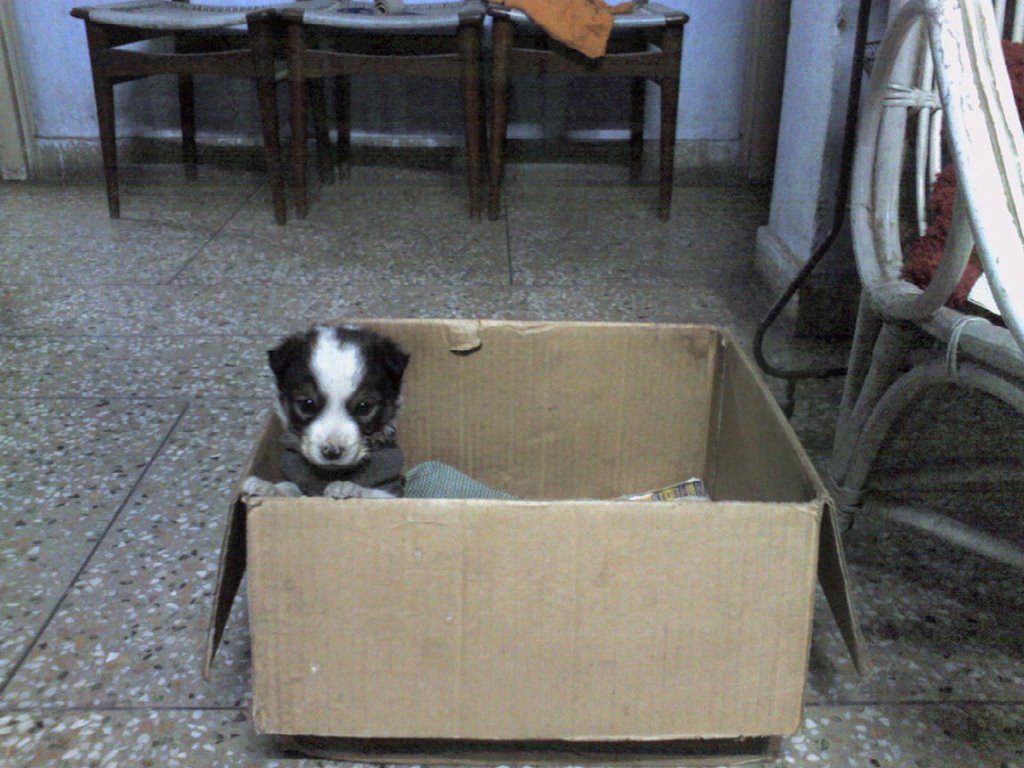
Tinkoo died on the evening of January 8, 2007. He was about one and a half months old.
Wherever he is now, I just want to thank him for loving me so much and so unconditionally and for bringing so much joy to my life, for the short period that he was with me! I also want to say sorry for not being with him when he needed me the most, for I just might have been able to do something to save him! I had gone out of town on a silly errand and he died while I was away. I wish I had not gone at all!
He had not been well for many days and was not responding well to the treatment by a veterinarian that I had been taking him to, for the past few days. I had decided to take him to another doctor and meant to do that on the very day that he died, but I had to go out of town. So, I asked my brother and mother to take him to the same veterinarian, as before, on monday and thought that I would take him to another doctor on tuesday. I had expected him to survive on that doctor's treatment for another day, but unfortunately that was not to be.
I have been contemplating revealing the identity of the veterinarian in question, in this blog entry, but am not sure if that would achieve any purpose. After all, my little Tinkoo is gone and anything I do now will not bring him back to life.
I hope God will soon give me the strength to be able to forgive all the people involved, including my own family members and even myself, who appear responsible right now for not being able to save my beloved Tinkoo!
Posted above, is Tinkoo's last photograph.
Sunday, December 31, 2006
Preserving Punjabiyat
The other day I was watching the ETC Punjabi channel on television and the Miss World-Punjaban contest, held recently in the city of Ludhiana, was on air. This was not the usual 'beauty' contest and had more to do with testing the contestants' awareness of Punjabi language and culture as well as their skills at practising folk art forms like Giddha and BoliyaaN. The dress code was also traditional throughout the various stages of the contest.
As far as I can remember, the various rounds included one based on solo-dance (traditional), a Giddha round, along with a round where each participant had to wear a bridal dress and one where each contestant had to pick a slip of paper out of each of two bowls, on one of which would be a question related to Punjabi heritage and culture for the young lady to answer and on the other would be a subject, a Boli related to which the girl would then have to recite.
By the time I turned on the television set, the Bridal-wear stage was already over and the solo-dance was in progress. Some of the participants managed to impress my mother (who was also watching) too, with their graceful movements. Others were not so good and some even seemed to have copied a few steps from dances in Bollywood movies, which was saddening. All of them danced to traditional Punjabi tunes, however.
Giddha was much better as all the participants, who had to perform together, as a group, for that is what the dance-form requires, had obviously received some help from the organisers too. It was a well-co-ordinated performance and though I am no expert, I dare say that all the girls put up a rather good show.
Also, all of them, some of whom had come from Indian states other than Punjab and some from as far away as Australia and the United States, appeared to have done their homework well for the final round and all but one participant managed to answer the questions with a fair amount of accuracy, as well as to recite the Boli that was asked of them. Some of the questions seemed fairly easy to me, while there were others the answers to which I did not know. So, I was amazed at and really admired the depth of knowledge that some of the pretty young ladies had about the rich Punjabi virsa (heritage). I was very pleasantly surprised to find out that such girls still do exist in this day and age, when most young Punjabans spend their spare time keeping up with the latest trends, fashions, television soap-operas, gossip and other such frivolous pursuits (It's not that most Punjabi young men fare any better on this count!) and I felt enormously proud of all of them!
The contestant who won the Miss World-Punjaban saggi-phull comes from Australia. I could not help noticing that she has an immensely beautiful pair of eyes. It is so difficult to notice such things, on account of the bare-dare or skin-tight outfits that most girls otherwise wear these days!
I am sure many would agree with me that the Sabhyacharak Sathh has done a highly commendable job by organising something like this. However, I think it would not only have added greatly to the prestige of the event, but also made it complete, in a way, if participation had also been secured from the Punjab that exists on the other side of the Indo-Pak border.
As far as I can remember, the various rounds included one based on solo-dance (traditional), a Giddha round, along with a round where each participant had to wear a bridal dress and one where each contestant had to pick a slip of paper out of each of two bowls, on one of which would be a question related to Punjabi heritage and culture for the young lady to answer and on the other would be a subject, a Boli related to which the girl would then have to recite.
By the time I turned on the television set, the Bridal-wear stage was already over and the solo-dance was in progress. Some of the participants managed to impress my mother (who was also watching) too, with their graceful movements. Others were not so good and some even seemed to have copied a few steps from dances in Bollywood movies, which was saddening. All of them danced to traditional Punjabi tunes, however.
Giddha was much better as all the participants, who had to perform together, as a group, for that is what the dance-form requires, had obviously received some help from the organisers too. It was a well-co-ordinated performance and though I am no expert, I dare say that all the girls put up a rather good show.
Also, all of them, some of whom had come from Indian states other than Punjab and some from as far away as Australia and the United States, appeared to have done their homework well for the final round and all but one participant managed to answer the questions with a fair amount of accuracy, as well as to recite the Boli that was asked of them. Some of the questions seemed fairly easy to me, while there were others the answers to which I did not know. So, I was amazed at and really admired the depth of knowledge that some of the pretty young ladies had about the rich Punjabi virsa (heritage). I was very pleasantly surprised to find out that such girls still do exist in this day and age, when most young Punjabans spend their spare time keeping up with the latest trends, fashions, television soap-operas, gossip and other such frivolous pursuits (It's not that most Punjabi young men fare any better on this count!) and I felt enormously proud of all of them!
The contestant who won the Miss World-Punjaban saggi-phull comes from Australia. I could not help noticing that she has an immensely beautiful pair of eyes. It is so difficult to notice such things, on account of the bare-dare or skin-tight outfits that most girls otherwise wear these days!
I am sure many would agree with me that the Sabhyacharak Sathh has done a highly commendable job by organising something like this. However, I think it would not only have added greatly to the prestige of the event, but also made it complete, in a way, if participation had also been secured from the Punjab that exists on the other side of the Indo-Pak border.
Saturday, December 23, 2006
Jee aayaaN nu (Welcome), Atif Aslam!
Atif Aslam is in town at the moment. He is to perform live at the Centre-Stage Mall in Noida tonight. Unfortunately, I will not be able to attend the concert this time. Well, may be next time!
In fact, he has been in India for a few days now. Earlier, while he was at Bombay, he appeared on a couple of shows on MTV India. I was able to catch a little bit of the conversations he had with VJ Rannvijay and VJ Anusha on MTV Super Select and MTV Chillout, respectively.
Apart from the fact that he is immensely talented musically, he seems to be quite a regular guy and a full-blooded Punjabi to boot. He also likes to ride his motorbike around and bought it with his own money, just like me. The only difference is that he owns a Honda VLX (which costs upwards of Rs.20,00,000), while I have a Yamaha RX135 (which I bought for about Rs.46,000!).
When asked about his favourite song among all that he has sung so far, he said it is 'Gal Sun Ja' from the album titled Jalpari. He also sang it live on the show, with no musical accompaniment except some light strains of his own guitar. It sounded absolutely wonderful that way and, in fact, far better than it does on the album!
I sincerely hope that some one will post the audio or video recording on the internet very soon, so that I can download it and listen to it as often as I want to.
The following video shows Atif performing the song live at the Indus Music Awards show not so long ago, obviously, with full musical accompaniment:
In fact, he has been in India for a few days now. Earlier, while he was at Bombay, he appeared on a couple of shows on MTV India. I was able to catch a little bit of the conversations he had with VJ Rannvijay and VJ Anusha on MTV Super Select and MTV Chillout, respectively.
Apart from the fact that he is immensely talented musically, he seems to be quite a regular guy and a full-blooded Punjabi to boot. He also likes to ride his motorbike around and bought it with his own money, just like me. The only difference is that he owns a Honda VLX (which costs upwards of Rs.20,00,000), while I have a Yamaha RX135 (which I bought for about Rs.46,000!).
When asked about his favourite song among all that he has sung so far, he said it is 'Gal Sun Ja' from the album titled Jalpari. He also sang it live on the show, with no musical accompaniment except some light strains of his own guitar. It sounded absolutely wonderful that way and, in fact, far better than it does on the album!
I sincerely hope that some one will post the audio or video recording on the internet very soon, so that I can download it and listen to it as often as I want to.
The following video shows Atif performing the song live at the Indus Music Awards show not so long ago, obviously, with full musical accompaniment:
Subscribe to:
Posts (Atom)

 Posts
Posts


 www.HyperSmash.com
