A little more than two weeks ago, I received a telephone call from a Calcutta-based dot-com company. Apparently, the recruiter had seen my resume online and wanted to discuss a vacant position. A couple of tele-conversations and about as many days later, he seemed to have decided to hire me and sent a job-offer through email, which I accepted as the money being offered was not too bad. Besides, I was rather excited at the prospect of going to work in a city I had never been to before and even purchased some new clothes for myself.
I agreed to join on September 17 and was on a Calcutta-bound flight on the morning of that day. After landing there at about 7:00 a.m., I took a pre-paid taxi to the guest-house, where the company had booked a room for me, the bill for which I was supposed to pay on my own. Perhaps I should have paid closer attention to the fact that the company offered to reimburse the expenses that I would incur on relocation, only 60 days after I joined service.
After dropping my luggage off at the guest-house, I went to the office. The first thing that struck me, upon arriving there, was that the office was located in a residential area and there were not even any signboards, to announce its presence. Once I had gone inside, I was welcomed by one of the ladies I had interacted with earlier, on account of completion of some formalities. She introduced me to another man who was to join the same day, as a graphic designer, and then, to the trainer who was to conduct the induction/orientation programme for the two of us. The trainer told us a little about the company and its business, besides making us aware of the online locations, on the company's intranet, of various policies and procedures. For a while, it actually felt like I was welcome in the organisation.
Soon, however, the atmosphere began to change, at least for me. While going through the company's policies, I came across one, according to which, I was to agree that I would withdraw my resume from any job-sites, where I might have posted it and that I would be liable to be dismissed from the company's employment if my resume was found posted at any such website, at any point of time in the future. There was another, according to which, if I were to quit within the period of probation, I would not be paid at all for the last month that I worked. I found these conditions to be very unfair, if not draconian.
A little later, I was summoned to see the senior recruiter who had hired me. He said that he hoped that whatever I had written in my resume and had told him earlier was true. This was quite surprising for me, as I would have expected him to have confirmed that before offering me a job. Then, he told me that I would soon have to see the 'big boss', who would give me some kind of an assignment.
When I asked him to suggest an alternative for the room at the guest-house, as it was rather too expensive, he said that it would be clear within a few days whether I would have to look for another place to stay at, at all. It, therefore, became clear that the company had given me an offer of employment without having completed the process of selection!
When I met the 'big boss', he told me, at first, to gather as much information as I could about the company, from its website and when I had finished with that, gave me a few requirements to work on. When he asked me how I planned to go about getting the work done, I asked him for access to the resume-databases of any of the job-portals that the company subscribed to (The company had sourced my resume, too, through such a database.). This appeared to have upset him a little, as he said that he wished I could find him resumes of suitable candidates for free, through personal contacts and references. It left me wondering about the reasons for which the company subscribed to the resume databases. In any case, he agreed to let one of his subordinates supply me with the necessary details i.e. the user-names and passwords. He also said that his company wished to employ those who had relevant knowledge of and experience of working on 'open-source technologies' and not 'Microsoft technologies', against the requirements that I was supposed to work on.
By evening, I was able to find five relevant resumes, out of all that I went through. Two of these were against one requirement and the rest against the other. I was asked to print these out and show these to the 'big boss' (He had obviously not heard of the concept of 'paperless office' or, if he had, had no intention to prevent deforestation by using less paper.). He said that he found two of the resumes, one against each requirement, to be good. However, he also declared that I had made a 'serious mistake' by short-listing the other three. The reason, according to him, was that the prospective candidates had worked on 'Microsoft technologies'. The fact that they also had relevant knowledge of and the requisite work-experience on the 'open-source technologies' that he and his company were looking for, did not seem to be of any importance to him. He then proceeded to make several derogatory remarks about my capabilities as a recruiter, even as I tried to explain to him that all five of the resumes belonged to people with relevant knowledge, skills and experience. Finally, when he could not seem to proffer a logical argument, he resorted to the farcical one that he did not wish to employ those who had worked with both kinds of software tools and techniques as he believed that they were 'a confused lot'!
That was the proverbial last straw, as far as I was concerned. It had not only become obvious to me that the company was unsure about whether it wished to employ me for an extended period of time, but I also feared that it might fail to pay the amount of money due to me, if I were to be asked to leave its employment within a few days. So, I decided to cut my losses and run.
As soon as I was out of the office, I telephoned my father to make the situation clear to him and then, my brother, to ask him to book an air-ticket for me, for the next evening, so that I could fly back to Delhi.
My father was waiting to pick me up at the Indira Gandhi Airport when I landed there and we reached home at about 1:30 a.m. on September 19.
I have been trying to think hard since then, but can not seem to recall if I have ever come across any organisation that can be described as an employer worse than the one I have written about here. Evidently, exploitation as a policy of management is still being practised in so-called corporate India.
Saturday, September 22, 2007


Friday, September 21, 2007

Saturday, September 08, 2007
Bugatti Veyron at top speed
The Top Gear team at BBC harnesses all 1001 of the horses under a Veyron's hood and takes it up to its maximum speed, on a test track in Germany.
Thank you so much, Atul, for sharing this video with me!
Friday, August 24, 2007
An Acceptance Speech
My blog has received an award and, obviously, I am greatly pleased to accept it.
If there were to be a real awards-function and I were to make an acceptance speech, I suppose it would have gone somewhat like this:
"Well...er...ahem...First of all, I would like to thank the Almighty...Then, I would like to thank my parents and teachers, who helped me learn to read and write the English language...
I would like to thank the so-called leaders of the Hindu and Muslim communities of pre-partition India, who, for the sake of building their personal fiefdoms, helped drive a wedge between the people of these two communities that ultimately led to partition of the country into two inpependent states i.e. India and Pakistan...I would, obviously, also have to thank the gullible people who followed these leaders and hated each other not only as much as their leaders wanted them to, but far beyond that...If they had not killed each other in such large numbers at the time of partition, it would have been so difficult to maintain the bitterness between the two countries for so many years that followed...I would like to thank the politicians on both sides, who realised that they could deflect peoples' attention away from their own failings, by attributing a lot of what was wrong with their respective countries, to 'the foreign hand'...Of course, they were also very ably assisted in their endeavours by the respective intelligence agencies that helped them foment trouble in each others' countries...In fact, such agencies are doing this, very effectively, even today, I believe, be it in Kashmir or in Balochistan...Again, I have to say "Thanks!" to the people on either side who, dutifully, continue to hate those on the other side of the border...I absolutely must thank those who enabled me to visit the Pakistani part of Punjab as a member of a Sikh Jathha, in April 2006, and see for myself how similar the Punjabis there are to my own self and other Punjabis from the Indian part of Punjab...If all these people had not done all that they have done in the past 70-80 years, I might never have started writing a blog at all!
A big "Thank you!" to Blogger.Com for providing me with a blogging-platform...They have not been able to solve the problems I have been having with the recently introduced 'Auto Save' feature and blank rows get inserted automatically between paragraphs, in addition to the one such row that I insert between any two paragraphs...This happens every time I return to work on a half-finished draft blog-post that I had saved (or rather 'Auto Save' had saved for me) the previous time I had signed in...but, anyway...
Last, but not the least, I would like to thank the jury for having found my blog to be worthy of the honour!"
If there were to be a real awards-function and I were to make an acceptance speech, I suppose it would have gone somewhat like this:
"Well...er...ahem...First of all, I would like to thank the Almighty...Then, I would like to thank my parents and teachers, who helped me learn to read and write the English language...
I would like to thank the so-called leaders of the Hindu and Muslim communities of pre-partition India, who, for the sake of building their personal fiefdoms, helped drive a wedge between the people of these two communities that ultimately led to partition of the country into two inpependent states i.e. India and Pakistan...I would, obviously, also have to thank the gullible people who followed these leaders and hated each other not only as much as their leaders wanted them to, but far beyond that...If they had not killed each other in such large numbers at the time of partition, it would have been so difficult to maintain the bitterness between the two countries for so many years that followed...I would like to thank the politicians on both sides, who realised that they could deflect peoples' attention away from their own failings, by attributing a lot of what was wrong with their respective countries, to 'the foreign hand'...Of course, they were also very ably assisted in their endeavours by the respective intelligence agencies that helped them foment trouble in each others' countries...In fact, such agencies are doing this, very effectively, even today, I believe, be it in Kashmir or in Balochistan...Again, I have to say "Thanks!" to the people on either side who, dutifully, continue to hate those on the other side of the border...I absolutely must thank those who enabled me to visit the Pakistani part of Punjab as a member of a Sikh Jathha, in April 2006, and see for myself how similar the Punjabis there are to my own self and other Punjabis from the Indian part of Punjab...If all these people had not done all that they have done in the past 70-80 years, I might never have started writing a blog at all!
A big "Thank you!" to Blogger.Com for providing me with a blogging-platform...They have not been able to solve the problems I have been having with the recently introduced 'Auto Save' feature and blank rows get inserted automatically between paragraphs, in addition to the one such row that I insert between any two paragraphs...This happens every time I return to work on a half-finished draft blog-post that I had saved (or rather 'Auto Save' had saved for me) the previous time I had signed in...but, anyway...
Last, but not the least, I would like to thank the jury for having found my blog to be worthy of the honour!"
Monday, August 13, 2007
Southwards bound: Delhi to Goa

It was the afternoon of the 13th of July and we had to catch a train in a few hours. So, we called for a taxi to drop us at the railway station.
As on most such trips, the luggage appeared to be more than absolutely necessary and my brother and I resigned ourselves to the fact that we would have to, well, lug it around throughout the trip. We loaded as much of it as possible into the rear of the hatch-back that was sent for us. I put one of the couple of bags that were left on to my lap and my brother placed the other at his feet, as we set off.
It was a hot and humid day and it did not help at all that the taxi-driver turned out to be friendlier and more talkative than I would have liked him to be. My mother did not seem to mind though and she and my brother chatted with the driver, even as my father and I mostly kept to ourselves throughout the drive that lasted almost an hour.
The 2780 down Goa Express departed on schedule at 1500 hours, from the Hazrat Nizamuddin railway station and after securing the luggage under the berths with a couple of iron chains, we settled down for a journey that was expected to last for at least 41 hours.
Besides the batteries of my brother's and my cellphone having run out much before we reached Goa, there were a few more memorable events that occurred on the way.
Near the Raja Ki Mandi station at Agra, we were met by a very repulsive sight. Several men were defecating in the open, near the railway tracks. Now, I had encountered something similar on earlier occasions, while travelling on local trains in the National Capital Region, but what I saw next left me incapable of reacting in any way, for a long time. At the edge of a paved surface along the tracks, squatted a slim, dark, young woman, with her shapely rear-end exposed to public view, as she answered the call of nature. I suppose she represented some perverse form of women's liberation, somewhat similar to the formation of street-gangs by female criminals in the Western countries.
Then, one of the soldiers, all of whom were, apparently, on leave and off to their hometowns, offered to bribe the T. T. E. (Travelling Ticket Examiner) to convert his 'waiting list' ticket into a regular one and to allot him a berth against that. However, since the soldier's ticket had been issued against a 'travel warrant', the T. T. E. was too scared to accept the bribe! So, the soldier could not secure a berth for himself. He tried to spread a sheet on the coach's floor, between my mother's and father's berths, but my mother would not allow him to do that either, since she was afraid that he might cause her to trip and fall, if she were to get up to visit the toilet at night. I think that the soldier should have boarded a general category compartment rather than a reserved one, since that is what all passengers with 'waiting list' tickets are supposed to do, unless their berths are confirmed before boarding the train. Amused as I was at the predicament of the corrupt T. T. E., I felt sad to observe the soldier's dishonesty and also the way Indian Railways treats the men who put their lives on the line for the country's safety and security.
Towards the end of the journey, my parents befriended a gentleman who turned out to be a Kashmiri businessman. He told us that he spends a few months each year at Goa. For the rest of the year, when there are not too many tourists there, he goes back home to Srinagar. He has a shop at Goa that sells Kashmiri carpets and handicraft products. I leave it to the readers to draw their own conclusions about how this reflects upon the situation in Kashmir.
Last, but not the least, some of the scenery that went by the train window was rather nice. The photograph posted above was taken somewhere in Maharashtra, as far as I can remember, and shows a rock formation that might just as well have been shaped by man, as by nature.
As on most such trips, the luggage appeared to be more than absolutely necessary and my brother and I resigned ourselves to the fact that we would have to, well, lug it around throughout the trip. We loaded as much of it as possible into the rear of the hatch-back that was sent for us. I put one of the couple of bags that were left on to my lap and my brother placed the other at his feet, as we set off.
It was a hot and humid day and it did not help at all that the taxi-driver turned out to be friendlier and more talkative than I would have liked him to be. My mother did not seem to mind though and she and my brother chatted with the driver, even as my father and I mostly kept to ourselves throughout the drive that lasted almost an hour.
The 2780 down Goa Express departed on schedule at 1500 hours, from the Hazrat Nizamuddin railway station and after securing the luggage under the berths with a couple of iron chains, we settled down for a journey that was expected to last for at least 41 hours.
Besides the batteries of my brother's and my cellphone having run out much before we reached Goa, there were a few more memorable events that occurred on the way.
Near the Raja Ki Mandi station at Agra, we were met by a very repulsive sight. Several men were defecating in the open, near the railway tracks. Now, I had encountered something similar on earlier occasions, while travelling on local trains in the National Capital Region, but what I saw next left me incapable of reacting in any way, for a long time. At the edge of a paved surface along the tracks, squatted a slim, dark, young woman, with her shapely rear-end exposed to public view, as she answered the call of nature. I suppose she represented some perverse form of women's liberation, somewhat similar to the formation of street-gangs by female criminals in the Western countries.
Then, one of the soldiers, all of whom were, apparently, on leave and off to their hometowns, offered to bribe the T. T. E. (Travelling Ticket Examiner) to convert his 'waiting list' ticket into a regular one and to allot him a berth against that. However, since the soldier's ticket had been issued against a 'travel warrant', the T. T. E. was too scared to accept the bribe! So, the soldier could not secure a berth for himself. He tried to spread a sheet on the coach's floor, between my mother's and father's berths, but my mother would not allow him to do that either, since she was afraid that he might cause her to trip and fall, if she were to get up to visit the toilet at night. I think that the soldier should have boarded a general category compartment rather than a reserved one, since that is what all passengers with 'waiting list' tickets are supposed to do, unless their berths are confirmed before boarding the train. Amused as I was at the predicament of the corrupt T. T. E., I felt sad to observe the soldier's dishonesty and also the way Indian Railways treats the men who put their lives on the line for the country's safety and security.
Towards the end of the journey, my parents befriended a gentleman who turned out to be a Kashmiri businessman. He told us that he spends a few months each year at Goa. For the rest of the year, when there are not too many tourists there, he goes back home to Srinagar. He has a shop at Goa that sells Kashmiri carpets and handicraft products. I leave it to the readers to draw their own conclusions about how this reflects upon the situation in Kashmir.
Last, but not the least, some of the scenery that went by the train window was rather nice. The photograph posted above was taken somewhere in Maharashtra, as far as I can remember, and shows a rock formation that might just as well have been shaped by man, as by nature.
Monday, August 06, 2007
India's first woman president
Columnist Shobhaa De has written in The Week, about the significance, or, rather, the lack of it, for issues related to women, of Pratibha Patil-Shekhawat taking over as president.
Saturday, July 28, 2007
Farewell, People's President!
Eminent jurist Fali S. Nariman pays glowing tributes to Dr. A. P. J. Abdul Kalam, the president of India from July 25, 2002, to July 25, 2007, in an article in The Indian Express.
I have always known that Dr. Kalam's personal integrity is beyond reproach, but this has been quite a revelation.
He has, arguably, been the best president India has had since Dr. S. Radhakrishnan.
I do wish that he had been elected for a second term in office.
I have always known that Dr. Kalam's personal integrity is beyond reproach, but this has been quite a revelation.
He has, arguably, been the best president India has had since Dr. S. Radhakrishnan.
I do wish that he had been elected for a second term in office.
Tuesday, July 10, 2007
Human Resources (Mis)Management
The advertisement appeared in the jobs supplement, Power Jobs, of the Hindustan Times. An N.G.O. (non-governmental organisation), which runs an institute for providing vocational training to the youth among the economically weaker sections of society, had advertised a number of job vacancies. Among the positions advertised, was one titled 'Executive - Human Resources'. So, I went along to attend the 'walk-in' interview.
The N.G.O. is backed by and, I believe, receives substantial financial support from a leading India-based pharmaceuticals company that has a presence in over 100 countries and is a front-runner, globally, in the generic pharmaceuticals business, in terms of revenues. The N.G.O. even shares a part of its name with the pharmaceuticals company.
Much of what transpired during the interview was quite interesting. It provided an insight into how the organisation, otherwise involved in philanthropic work, treats its own employees and how much it trusts them.
The following is an extract from the conversation that I had with the interviewer, who was a podgy, dark-complexioned woman, with a pronounced South-Indian accent:-
Interviewer: What is the most important quality that a person working in the field of Human Resources Management should have?
Sidhusaaheb: He or she should be a good listener.
Interviewer: Any other qualities that are important?
Sidhusaaheb: He or she should be able to empathise...
Interviewer: No, those are wrong answers.
Sidhusaaheb: I would say that is your point of view and it is different from mine.
Interviewer: The correct answer is 'confidentiality'. The Human Resources department has all the data about employees' salaries and a lot of problems are caused when employees find out about their colleagues' salaries. So, the HR department has to ensure that the data about salaries remain confidential.
Sidhusaaheb: All the data about salaries are also available with the Accounts department, so how can the HR department keep the information confidential?
Interviewer: No, no...The HR department has to keep the data confidential. So, 'confidentiality' is the most important quality to have, for a Human Resources professional.
Sidhusaaheb: Well, I shall again say that is your point of view and it is different from mine.
Interviewer: Thank you!
I did not bother to take the time to explain to her that if the salary structure of her organisation was fair and based on criteria understood and accepted by all employees, the company would not have had to try and adopt such a cloak-and-dagger approach. Incidentally, in all of the organisations that I have worked with, most employees had a fairly good idea of the salaries associated with various positions, whether or not the information had been shared with them by the 'management'.
Such policies, I believe, are fundamentally in disagreement with the basic concepts of Human Resources Management in the modern world. Over the years that I have spent working, I have realised that those concepts are employed only in the name, in most Indian business organisations, even in this day and age.
Recruitment and Selection are, still, largely based on the personal preferences of those in charge. Decisions to conduct Training programmes are not based on any scientific Training Needs analyses. Money and material rewards are still thought of as the greatest motivators for employees. Performance Appraisals, even though these are ostensibly based on best practices, are rigged so that the results reflect the personal opinions that the bosses have of the employees being appraised. The concept of Self-Directed Work Teams is alien to organisations in this country and what has been very conveniently done is that units formerly known as departments and work-groups are now called teams, with the 'worker' now known as 'team-member' and the 'supervisor' as 'team-leader', without effecting any change in the functioning.
Team-building is limited to periodic trips to scenic locations, with pleasurable activities like rock-climbing, river-rafting, etc., thrown in and is not taken too seriously by any one, since the Appraisal, as well as the Compensation and Reward Management systems, are still based on individual, rather than team-based performance criteria. When I sought to implement a Team Reward System in one of the organisations I worked with, the COO (Chief Operations Officer) rejected the idea saying that he had worked for five companies, earlier, and none employed any such system, when he ran out of logical arguments against it!
In his book titled 'Organizational Behavior: Concepts, Controversies, Applications' (published by Prentice-Hall, Inc.), Stephen P. Robbins writes, "Throughout this book we've argued that national differences-that is, national cultures-must be taken into account if accurate predictions are to be made about organizational behavior in different countries." and "The research indicates that national culture has a greater impact on employees than does their organization's culture.". I could not agree more!
So, is there still hope and will the hypocrisy ever come to an end? I do not have a definite answer.
The N.G.O. is backed by and, I believe, receives substantial financial support from a leading India-based pharmaceuticals company that has a presence in over 100 countries and is a front-runner, globally, in the generic pharmaceuticals business, in terms of revenues. The N.G.O. even shares a part of its name with the pharmaceuticals company.
Much of what transpired during the interview was quite interesting. It provided an insight into how the organisation, otherwise involved in philanthropic work, treats its own employees and how much it trusts them.
The following is an extract from the conversation that I had with the interviewer, who was a podgy, dark-complexioned woman, with a pronounced South-Indian accent:-
Interviewer: What is the most important quality that a person working in the field of Human Resources Management should have?
Sidhusaaheb: He or she should be a good listener.
Interviewer: Any other qualities that are important?
Sidhusaaheb: He or she should be able to empathise...
Interviewer: No, those are wrong answers.
Sidhusaaheb: I would say that is your point of view and it is different from mine.
Interviewer: The correct answer is 'confidentiality'. The Human Resources department has all the data about employees' salaries and a lot of problems are caused when employees find out about their colleagues' salaries. So, the HR department has to ensure that the data about salaries remain confidential.
Sidhusaaheb: All the data about salaries are also available with the Accounts department, so how can the HR department keep the information confidential?
Interviewer: No, no...The HR department has to keep the data confidential. So, 'confidentiality' is the most important quality to have, for a Human Resources professional.
Sidhusaaheb: Well, I shall again say that is your point of view and it is different from mine.
Interviewer: Thank you!
I did not bother to take the time to explain to her that if the salary structure of her organisation was fair and based on criteria understood and accepted by all employees, the company would not have had to try and adopt such a cloak-and-dagger approach. Incidentally, in all of the organisations that I have worked with, most employees had a fairly good idea of the salaries associated with various positions, whether or not the information had been shared with them by the 'management'.
Such policies, I believe, are fundamentally in disagreement with the basic concepts of Human Resources Management in the modern world. Over the years that I have spent working, I have realised that those concepts are employed only in the name, in most Indian business organisations, even in this day and age.
Recruitment and Selection are, still, largely based on the personal preferences of those in charge. Decisions to conduct Training programmes are not based on any scientific Training Needs analyses. Money and material rewards are still thought of as the greatest motivators for employees. Performance Appraisals, even though these are ostensibly based on best practices, are rigged so that the results reflect the personal opinions that the bosses have of the employees being appraised. The concept of Self-Directed Work Teams is alien to organisations in this country and what has been very conveniently done is that units formerly known as departments and work-groups are now called teams, with the 'worker' now known as 'team-member' and the 'supervisor' as 'team-leader', without effecting any change in the functioning.
Team-building is limited to periodic trips to scenic locations, with pleasurable activities like rock-climbing, river-rafting, etc., thrown in and is not taken too seriously by any one, since the Appraisal, as well as the Compensation and Reward Management systems, are still based on individual, rather than team-based performance criteria. When I sought to implement a Team Reward System in one of the organisations I worked with, the COO (Chief Operations Officer) rejected the idea saying that he had worked for five companies, earlier, and none employed any such system, when he ran out of logical arguments against it!
In his book titled 'Organizational Behavior: Concepts, Controversies, Applications' (published by Prentice-Hall, Inc.), Stephen P. Robbins writes, "Throughout this book we've argued that national differences-that is, national cultures-must be taken into account if accurate predictions are to be made about organizational behavior in different countries." and "The research indicates that national culture has a greater impact on employees than does their organization's culture.". I could not agree more!
So, is there still hope and will the hypocrisy ever come to an end? I do not have a definite answer.
Sunday, July 01, 2007
2137 Dn. Punjab Mail


My ancestral village is located in Bathinda district, in Punjab.
One of the most convenient ways to travel there from the place in the National Capital Region, where I presently reside, is to travel on the 2137 down, Punjab Mail, up to Bathinda, from where one can catch a bus to a small town and then another one, on to the village.
The train is supposed to depart from the local railway station at about 7:40 p.m., however, I have never seen it do that since it is almost invariably late. So, obviously, it almost never reaches Bathinda on time either, which is not all that bad actually, because it allows me a few more hours of sleep. Needless to add, it also helps reduce the chances of my having slept past the station.
However, a reserved berth in a second class sleeper compartment does not always ensure uninterrupted sleep.
On a recent trip, I must have curled up a bit while asleep, for when I tried to stretch my legs, my feet met with an obstruction. I woke up to find that a middle-aged man had climbed on to my (upper) berth to occupy the vacant space beyond my feet and was seated there, quite comfortably. My first impulse was to pretend to go back to sleep and push him down to the coach's floor with my feet. I overcame it soon, however, and asked him, very politely, if he could share a berth with someone shorter in height. He was not one to give in easily though and said that there was no point in doing that since he was, in any case, going to get off the train in 'a few minutes', which, it turned out, combined to form more than an hour!
On another such trip, I was woken up in the middle of the night by a loud female voice.
"Nee Parsinni, langhyaa, aithhe taaN lammiyaaN seataaN vehliyaaN hi paiyaaN ne!"
(O Parsinni, come along, a number of long seats (she meant to say berths) are vacant here!)
Along came the T.T.E. (Travelling Ticket Examiner) instead and, after enquiring about the old lady and her companions' travel plan, advised them to move to an unreserved compartment, which they did after a few moments of animated discussion. I slept undisturbed for the rest of the journey.
Besides incidents such as these, what makes the experience of travelling on the Punjab Mail special for me is the beauty of the Bathinda station (which features in the second of the two photographs posted above and where most of the constructions date back to the colonial-era).
The web site of the Indian Railways Fan Club Association, provides the following information about the famous train:
"The Punjab Mail runs between Bombay and Firozpur. This was the GIPR train; there was another train of the same name that ran for a while between Calcutta and Delhi on the East Indian Railway. The Punjab Mail made its debut on 1st June 1912. Like the later Frontier Mail, the Punjab Mail too used to connect with the P&O steamships on fixed mail days and would steam off from the Mole Station; on other days it departed from Bombay's Victoria Terminus.
For a brief period, an extended service called The Punjab Limited operated between Bombay VT and Peshawar, on the GIPR and NWR; this was a rival to the Frontier Mail, but does not seem to have lasted as a service for long. (There is some doubt whether the Punjab Limited was an entirely separate special service or a special extension of the Punjab Mail.) The Punjab Mail was among the fastest trains in pre-Independence India (probably the fastest one at various times). The train had air-cooled cars in 1945.
It was hauled by a variety of locos. XC locos were used after the rake was extended by the addition of third-class cars in the 1930s. In 1929-1930 EA/1 electric locos were used experimentally. The train later ran electric-hauled until Manmad, where a WP took over. From 1968 the train was diesel-hauled until Jhansi and by 1976 or so it became diesel-hauled all the way. A WCAM-1 loco was used a few times in an attempt to provide continuous haulage without locomotive changes, in the 1970s. Since then, and continuing today, it is hauled by a DC locomotive until Igatpuri and an AC locomotive thereafter towards Delhi and Firozpur."
One of the most convenient ways to travel there from the place in the National Capital Region, where I presently reside, is to travel on the 2137 down, Punjab Mail, up to Bathinda, from where one can catch a bus to a small town and then another one, on to the village.
The train is supposed to depart from the local railway station at about 7:40 p.m., however, I have never seen it do that since it is almost invariably late. So, obviously, it almost never reaches Bathinda on time either, which is not all that bad actually, because it allows me a few more hours of sleep. Needless to add, it also helps reduce the chances of my having slept past the station.
However, a reserved berth in a second class sleeper compartment does not always ensure uninterrupted sleep.
On a recent trip, I must have curled up a bit while asleep, for when I tried to stretch my legs, my feet met with an obstruction. I woke up to find that a middle-aged man had climbed on to my (upper) berth to occupy the vacant space beyond my feet and was seated there, quite comfortably. My first impulse was to pretend to go back to sleep and push him down to the coach's floor with my feet. I overcame it soon, however, and asked him, very politely, if he could share a berth with someone shorter in height. He was not one to give in easily though and said that there was no point in doing that since he was, in any case, going to get off the train in 'a few minutes', which, it turned out, combined to form more than an hour!
On another such trip, I was woken up in the middle of the night by a loud female voice.
"Nee Parsinni, langhyaa, aithhe taaN lammiyaaN seataaN vehliyaaN hi paiyaaN ne!"
(O Parsinni, come along, a number of long seats (she meant to say berths) are vacant here!)
Along came the T.T.E. (Travelling Ticket Examiner) instead and, after enquiring about the old lady and her companions' travel plan, advised them to move to an unreserved compartment, which they did after a few moments of animated discussion. I slept undisturbed for the rest of the journey.
Besides incidents such as these, what makes the experience of travelling on the Punjab Mail special for me is the beauty of the Bathinda station (which features in the second of the two photographs posted above and where most of the constructions date back to the colonial-era).
The web site of the Indian Railways Fan Club Association, provides the following information about the famous train:
"The Punjab Mail runs between Bombay and Firozpur. This was the GIPR train; there was another train of the same name that ran for a while between Calcutta and Delhi on the East Indian Railway. The Punjab Mail made its debut on 1st June 1912. Like the later Frontier Mail, the Punjab Mail too used to connect with the P&O steamships on fixed mail days and would steam off from the Mole Station; on other days it departed from Bombay's Victoria Terminus.
For a brief period, an extended service called The Punjab Limited operated between Bombay VT and Peshawar, on the GIPR and NWR; this was a rival to the Frontier Mail, but does not seem to have lasted as a service for long. (There is some doubt whether the Punjab Limited was an entirely separate special service or a special extension of the Punjab Mail.) The Punjab Mail was among the fastest trains in pre-Independence India (probably the fastest one at various times). The train had air-cooled cars in 1945.
It was hauled by a variety of locos. XC locos were used after the rake was extended by the addition of third-class cars in the 1930s. In 1929-1930 EA/1 electric locos were used experimentally. The train later ran electric-hauled until Manmad, where a WP took over. From 1968 the train was diesel-hauled until Jhansi and by 1976 or so it became diesel-hauled all the way. A WCAM-1 loco was used a few times in an attempt to provide continuous haulage without locomotive changes, in the 1970s. Since then, and continuing today, it is hauled by a DC locomotive until Igatpuri and an AC locomotive thereafter towards Delhi and Firozpur."
Tuesday, June 26, 2007
India's inferiority complex
I was thinking of writing on the subject, but veteran journalist Tavleen Singh has already written very incisively about this in her weekly column in The Sunday Express. So, there is no reason for me to try and re-invent the wheel!
Tuesday, June 19, 2007
My Mother's Tomato Ketchup Recipe
The inspiration for this blog post came, when my mother had a good look at a certain recipe blog. It made her decide to share her famed (at least in the family) recipe for preparing tomato ketchup, which is as follows, with all netizens.
Ingredients:
Ingredients:
- 5 kg tomatoes
- 750 gm sugar
- 250 gm onions
- 100 gm ginger
- 50 gm garlic
- 1 cup malt vinegar
- 1 tea-spoon sodium benzoate
- 25 gm garam masala (cumin, black pepper, cloves, 1/4 inch of a cinnamon stick, all ground together)
- salt (to taste)
- red chilly powder (to taste)
- Chop the tomatoes, onions, garlic and ginger and steam these in a pressure cooker (Turn the heat down as soon as steam builds up and then, turn it off after another five minutes.).
- Let these cool and then liquefy in a food processor.
- Pass the mixture through a coarse sieve (with large mesh-size), so that the pulp passes through, leaving only the skins behind.
- Add the sugar and heat on a fire, so that the sugar dissolves.
- Put a drop of the liquid on a plate, to check the density. If it runs over, then it needs to be thickened more by heating for a slightly longer period. If it does not, then it is done.
- After achieving the required density, add salt and simmer for another 10 minutes.
- Add the garam masala, sodium benzoate and red chilly powder to the malt vinegar. Mix well and add to the main mixture.
- Pour the (still hot) liquid into bottles, but do not close the lids, which is to be done only after the ketchup has cooled to room temperature.
Friday, June 08, 2007
An open letter to Lt. Col. (Retd.) K. S. Bainsla
Sir,
I am a great admirer of the Indian Army and, therefore, its officers and men. This is not in the least because various members of my family have served or are serving this great institution in different capacities. It is more so on account of the fact that the Army has remained largely unaffected by the tools of divisive politics like communalism, casteism, etc., which have been used to polarise society by those who seek to create 'vote-banks', in order to serve their own vested interests.
It is on account of this that your conduct over the past few days seems, at least to me, to have been unbecoming of a former Army officer and a gentleman, as you have led a series of protests (some of which have been violent and resulted in a number of deaths, besides the damage of national property worth crores of rupees) to demand the Scheduled Tribe status for the Gujjar community, to which you also belong.
Reservation, as, I believe, has been amply demonstrated over the past 60 years or so, implies providing admissions into educational institutions or jobs in the government or public sector, on the basis of various criteria like caste, tribe, etc., to those who are otherwise not competent enough to have secured these on their own.
I would like to know if you, sir, would recommend reservation-based recruitments in the army, as well, and also whether any of your two sons who are serving Colonels in the army would be willing to lead such men (recruited on the basis of the reservation policy and not merit) into battle or into an anti-insurgency operation, if required. If the answer is no, then please do explain why you choose to campaign for reservations at all.
With your third son being employed with a reputed telecommunications company and your only daughter being an officer in the Indian Revenue Service, in addition to the fact that you, yourself, rose to the rank of Lieutenant Colonel, after having joined the army as a sepoy, your family epitomises the spirit of merit and excellence and should be a role model for others in your community.
Therefore, I fail to comprehend the reasons for which you wish to breed and perpetuate incompetence amongst your people.
I believe you could do a lot more of good for your community, if you were to help concentrate the energies of your people on the provision of primary and secondary education and basic healthcare, or, rather, the lack of it. I suggest that you make use of tools like the Right to Information Act to find out about the funds allocated for these purposes and perhaps employ means like peaceful protest to ensure that the money reaches where it is meant to and is utilised properly.
I am sure that a man of your resourcefulness could make things start moving on other fronts like micro-finance too, which could help people, especially the poor living in rural areas, to become self-employed and, thus, lead to progress. Plenty of data on the subject are available online.
The formation of charitable trusts or societies for setting up educational institutions and health-care facilities is another idea that should prove very useful for the purpose that you have stated that you seek to achieve i.e. the welfare of your people.
I am sure that you can think of many more such ideas and sincerely hope that you shall start doing so at the earliest possible.
Yours sincerely,
A concerned citizen of India
I am a great admirer of the Indian Army and, therefore, its officers and men. This is not in the least because various members of my family have served or are serving this great institution in different capacities. It is more so on account of the fact that the Army has remained largely unaffected by the tools of divisive politics like communalism, casteism, etc., which have been used to polarise society by those who seek to create 'vote-banks', in order to serve their own vested interests.
It is on account of this that your conduct over the past few days seems, at least to me, to have been unbecoming of a former Army officer and a gentleman, as you have led a series of protests (some of which have been violent and resulted in a number of deaths, besides the damage of national property worth crores of rupees) to demand the Scheduled Tribe status for the Gujjar community, to which you also belong.
Reservation, as, I believe, has been amply demonstrated over the past 60 years or so, implies providing admissions into educational institutions or jobs in the government or public sector, on the basis of various criteria like caste, tribe, etc., to those who are otherwise not competent enough to have secured these on their own.
I would like to know if you, sir, would recommend reservation-based recruitments in the army, as well, and also whether any of your two sons who are serving Colonels in the army would be willing to lead such men (recruited on the basis of the reservation policy and not merit) into battle or into an anti-insurgency operation, if required. If the answer is no, then please do explain why you choose to campaign for reservations at all.
With your third son being employed with a reputed telecommunications company and your only daughter being an officer in the Indian Revenue Service, in addition to the fact that you, yourself, rose to the rank of Lieutenant Colonel, after having joined the army as a sepoy, your family epitomises the spirit of merit and excellence and should be a role model for others in your community.
Therefore, I fail to comprehend the reasons for which you wish to breed and perpetuate incompetence amongst your people.
I believe you could do a lot more of good for your community, if you were to help concentrate the energies of your people on the provision of primary and secondary education and basic healthcare, or, rather, the lack of it. I suggest that you make use of tools like the Right to Information Act to find out about the funds allocated for these purposes and perhaps employ means like peaceful protest to ensure that the money reaches where it is meant to and is utilised properly.
I am sure that a man of your resourcefulness could make things start moving on other fronts like micro-finance too, which could help people, especially the poor living in rural areas, to become self-employed and, thus, lead to progress. Plenty of data on the subject are available online.
The formation of charitable trusts or societies for setting up educational institutions and health-care facilities is another idea that should prove very useful for the purpose that you have stated that you seek to achieve i.e. the welfare of your people.
I am sure that you can think of many more such ideas and sincerely hope that you shall start doing so at the earliest possible.
Yours sincerely,
A concerned citizen of India
Monday, May 28, 2007

Sunday, May 13, 2007
A friend indeed
I have known him for several years now. He is an old friend of my brother's and that is how we got introduced, when I returned to live with my family, after completing my post-graduate degree. We seemed to hit it off rather well from the first meeting onwards and have been good friends ever since.
My mother has named him Zakhmi (the injured one) and the name has stuck, because he tends to get into fights every now and then and, in which, often, he is out-numbered many to one. The injuries sustained are serious at times and he has almost moved on to the 'happy hunting grounds' on more than one occasion. It took a really long time for a particularly deep wound on his neck, which was the result of a rather nasty confrontation, I suppose, to heal. My brother and I washed it with anti-septic solution every day and a kind gentleman down the street fed him anti-biotics.
Coming from a clan of warrriors, myself, I can perfectly understand his compulsion to stand up for what he believes is right, even though the prospect of losing a dear friend is certainly not a good one.
By the grace of the Almighty, he is doing fine till now and bears the scars of battle with pride.
When Zakhmi was younger, my brother had bestowed upon him the title of 'the playful one', for whenever he would spot my brother or I, he would come running and repeatedly raise one of his front-paws, in a gesture that sought to communicate the fact that he wanted to play with us.
Though born on the street and still living there, he is smarter than most dogs I have known. He seems to understand perfectly whatever my mother says to him in chaste Punjabi and acts accordingly. On the other hand, if he has something to say to any of us, he is, generally, able to convey that through his actions, without much difficulty.
The colour of his coat is the same as that of a lion and he has a very regal bearing. He walks or trots in a fashion, which seems to suggest that he was either a member of a royal family or a soldier of high rank, in a previous birth. Even in this life, I think he would have made an excellent police or military dog, had he been given the chance, and marched smartly in parades, with his unit or battalion .
He does not pick up food thrown in front of him and eats only when fed by hand. His self-respect, obviously, is of paramount importance to him.
Being the large-hearted 'gentleman' (or should I say 'gentledog'?) that he is, he cares a lot for his friends. He amply demonstrated this quality of his, when my beloved Tinkoo died and he was the first to offer me a shoulder to cry upon.
More recently, I developed a huge boil on my left knee that became septic, causing it to fill up with a lot of pus. The resultant pain made it difficult for me to stand up or even sit straight for an extended period of time. The three or four steps required to be taken to go to the toilet adjacent to my room seemed to be one of the longest journeys I have ever embarked upon. So, I was unable to venture outside for several days and this must have caused Zakmi to become worried, for he decided to visit me to ask after my health.
One evening, he came to our front door and started scratching it with his nails. When my mother opened the door, he simply rushed past her and came straight to my bed-side. After getting his ears scratched and head patted for a while, he went away, as quickly as he had come. This sequence continued to be repeated daily, over the next few days, until I had recovered fully.
His visits were the highlights of my day and I looked forward to seeing him.
I feel blessed to have him as a friend!
My mother has named him Zakhmi (the injured one) and the name has stuck, because he tends to get into fights every now and then and, in which, often, he is out-numbered many to one. The injuries sustained are serious at times and he has almost moved on to the 'happy hunting grounds' on more than one occasion. It took a really long time for a particularly deep wound on his neck, which was the result of a rather nasty confrontation, I suppose, to heal. My brother and I washed it with anti-septic solution every day and a kind gentleman down the street fed him anti-biotics.
Coming from a clan of warrriors, myself, I can perfectly understand his compulsion to stand up for what he believes is right, even though the prospect of losing a dear friend is certainly not a good one.
By the grace of the Almighty, he is doing fine till now and bears the scars of battle with pride.
When Zakhmi was younger, my brother had bestowed upon him the title of 'the playful one', for whenever he would spot my brother or I, he would come running and repeatedly raise one of his front-paws, in a gesture that sought to communicate the fact that he wanted to play with us.
Though born on the street and still living there, he is smarter than most dogs I have known. He seems to understand perfectly whatever my mother says to him in chaste Punjabi and acts accordingly. On the other hand, if he has something to say to any of us, he is, generally, able to convey that through his actions, without much difficulty.
The colour of his coat is the same as that of a lion and he has a very regal bearing. He walks or trots in a fashion, which seems to suggest that he was either a member of a royal family or a soldier of high rank, in a previous birth. Even in this life, I think he would have made an excellent police or military dog, had he been given the chance, and marched smartly in parades, with his unit or battalion .
He does not pick up food thrown in front of him and eats only when fed by hand. His self-respect, obviously, is of paramount importance to him.
Being the large-hearted 'gentleman' (or should I say 'gentledog'?) that he is, he cares a lot for his friends. He amply demonstrated this quality of his, when my beloved Tinkoo died and he was the first to offer me a shoulder to cry upon.
More recently, I developed a huge boil on my left knee that became septic, causing it to fill up with a lot of pus. The resultant pain made it difficult for me to stand up or even sit straight for an extended period of time. The three or four steps required to be taken to go to the toilet adjacent to my room seemed to be one of the longest journeys I have ever embarked upon. So, I was unable to venture outside for several days and this must have caused Zakmi to become worried, for he decided to visit me to ask after my health.
One evening, he came to our front door and started scratching it with his nails. When my mother opened the door, he simply rushed past her and came straight to my bed-side. After getting his ears scratched and head patted for a while, he went away, as quickly as he had come. This sequence continued to be repeated daily, over the next few days, until I had recovered fully.
His visits were the highlights of my day and I looked forward to seeing him.
I feel blessed to have him as a friend!
Friday, May 04, 2007
Saanjha Virsa PunjabiaaN Da (The Shared Heritage of Punjabis)


A magazine is to be published in the Punjabi language, every quarter, simultaneously from Lahore, Punjab, Pakistan and Ludhiana, Punjab, India. The Lahore edition is to be printed in the Shahmukhi script and the Ludhiana edition in Gurmukhi. The content of both editions, obviously, is to be exactly the same.
This is the first such experiment that I am aware of and I sincerely hope that it would not only be successful in terms of the magazine becoming immensely popular, but also achieve its larger goal of bringing Punjabis, wherever in the world they might reside, closer to each other.
I came to know about it when the Academy of the Punjab in North America asked permission to include, in the first issue, my blog-posts about my Pakistan trip, granting which, was, of course, a great honour for me. They even had it all translated into Punjabi, on their own.
The magazine is to be called Sanjh, which is very appropriate as it seeks to preserve and promote the glorious language, culture and heritage that all Punjabis share.
This is the first such experiment that I am aware of and I sincerely hope that it would not only be successful in terms of the magazine becoming immensely popular, but also achieve its larger goal of bringing Punjabis, wherever in the world they might reside, closer to each other.
I came to know about it when the Academy of the Punjab in North America asked permission to include, in the first issue, my blog-posts about my Pakistan trip, granting which, was, of course, a great honour for me. They even had it all translated into Punjabi, on their own.
The magazine is to be called Sanjh, which is very appropriate as it seeks to preserve and promote the glorious language, culture and heritage that all Punjabis share.
Thursday, April 12, 2007
I am a Himesh Reshammiya fan!
Before any one jumps to any conclusions, let me clarify that I do not care much for Himesh's nasal twang. I think he does a fine job as a composer though, especially when the vocals are being rendered by others.
Here is one recent such example, which I like quite a bit:
The singers are Raahat Fateh Ali Khan and Krishna.
Here is one recent such example, which I like quite a bit:
The singers are Raahat Fateh Ali Khan and Krishna.
Friday, April 06, 2007
A Reason to Smile
The following 'middle' appeared on the editorial page of The Tribune, yesterday:
We went to Lahore recently for an ILO sponsored five-nation meet on child labour. My wife came along. She is Lahore born, 7 Club Road to be precise, which turned out to be a rather prestigious address, being the official residence of the Punjab Chief Minister.
Suddenly, I had an idea. Why not drop in at 7, Club Road, to see what it was like? Without a warning to anybody, we took off in the car provided to me by the State Government, our police escort dutifully behind. When we drew up at the bungalow around 11.00 p.m. its gates were closed. The police van sounded its hooter, and the guards opened up. We parked inside, stood on the lawns, silently took in the scene before us, and left.
On day 2, my wife and I went over to Zaidi’s, a famous photographer located at 23, Mall Road. My parents’ post-wedding photograph was taken by the late Syed Mohd. Ali there. The establishment, which first set up shop in Allahabad way back in 1904, is now owned by his son, Shahid Zaidi.
We were met by his shagird, one Mr Yunus, who surprised us by rolling out the old records and, voila, there was my dad’s name in one of his registers which showed that the photograph adorning our drawing room in New Delhi was clicked by Zaidi’s in Mall Road, Lahore, on March 12, 1945, a month and a half after their wedding in Hardwar.
Here I was examining it under a lamp, on November 21, 2006. On an impulse, I asked Mr Yunus whether he could take a snap of ours. When he heard of the connection with my parents’ photograph, he suggested we could go to the Gulberg Shop “where Shahid Saheb sits”, but we said, no, it had to be the same place on Mall Road! So he took us inside, and with great professional ease, snapped us in about a dozen postures.
On Thursday, my wife went and selected the print of our photograph at Zaidi’s, with the promise to pick it up on Friday at 5 pm on our way to the airport to catch the return flight to Delhi.
At 5 we were back to Zaidi’s. Yunus Saheb gave us our framed photograph, and when we asked how much, he said it was complimentary, ‘‘on instructions of Shahid Saheb”. I then requested him to connect me to his owner in Gulberg, and when he came on the line, I thanked him for his gesture, and told him I was leaving a token of my feelings for him - an Indian silk tie and a packet of Darjeeling tea.
I also told him that, maybe, a day would come when my daughter would land up at his establishment on the Mall with her husband, for yet another takeaway to complete the picture, if that is the expression.
Thank you, Shahid Saheb, for rekindling my past, and for holding an opportunity for my daughter in the future.
From Zaidi, with love
by K.M. Sahni
We went to Lahore recently for an ILO sponsored five-nation meet on child labour. My wife came along. She is Lahore born, 7 Club Road to be precise, which turned out to be a rather prestigious address, being the official residence of the Punjab Chief Minister.
Suddenly, I had an idea. Why not drop in at 7, Club Road, to see what it was like? Without a warning to anybody, we took off in the car provided to me by the State Government, our police escort dutifully behind. When we drew up at the bungalow around 11.00 p.m. its gates were closed. The police van sounded its hooter, and the guards opened up. We parked inside, stood on the lawns, silently took in the scene before us, and left.
On day 2, my wife and I went over to Zaidi’s, a famous photographer located at 23, Mall Road. My parents’ post-wedding photograph was taken by the late Syed Mohd. Ali there. The establishment, which first set up shop in Allahabad way back in 1904, is now owned by his son, Shahid Zaidi.
We were met by his shagird, one Mr Yunus, who surprised us by rolling out the old records and, voila, there was my dad’s name in one of his registers which showed that the photograph adorning our drawing room in New Delhi was clicked by Zaidi’s in Mall Road, Lahore, on March 12, 1945, a month and a half after their wedding in Hardwar.
Here I was examining it under a lamp, on November 21, 2006. On an impulse, I asked Mr Yunus whether he could take a snap of ours. When he heard of the connection with my parents’ photograph, he suggested we could go to the Gulberg Shop “where Shahid Saheb sits”, but we said, no, it had to be the same place on Mall Road! So he took us inside, and with great professional ease, snapped us in about a dozen postures.
On Thursday, my wife went and selected the print of our photograph at Zaidi’s, with the promise to pick it up on Friday at 5 pm on our way to the airport to catch the return flight to Delhi.
At 5 we were back to Zaidi’s. Yunus Saheb gave us our framed photograph, and when we asked how much, he said it was complimentary, ‘‘on instructions of Shahid Saheb”. I then requested him to connect me to his owner in Gulberg, and when he came on the line, I thanked him for his gesture, and told him I was leaving a token of my feelings for him - an Indian silk tie and a packet of Darjeeling tea.
I also told him that, maybe, a day would come when my daughter would land up at his establishment on the Mall with her husband, for yet another takeaway to complete the picture, if that is the expression.
Thank you, Shahid Saheb, for rekindling my past, and for holding an opportunity for my daughter in the future.
Saturday, March 31, 2007
Violation of Sikhism's Basic Tenets
The following is the text of the letter that I sent through email to the Shiromani Gurdwara Parbandhak Committee (SGPC), a few months ago, and to which neither has a reply been sent, nor has the practice that I wrote to protest against been stopped:
"Sat Sri Akal,
I would very humbly like to bring to your attention something, which I have noticed and found very perturbing.
The daily Ardas at the Harmandir Sahib, in the evenings, after the recitation of the Rehraas Sahib, in its last stanza, addresses 'Dhan Dhan Sri Guru Ram Das Sahib ji' and 'Dhan Dhan Sri Guru Granth Sahib ji' but makes no mention of 'Sachche Pita Waheguru'.
I am no learned scholar and am just an ordinary Sikh, but to my mind this does not appear to be in line with the teachings of the ten Gurus as well as the Guru Granth Sahib.
From what I understand, we remember all the ten Gurus as well as the Guru Granth Sahib in the very first stanza of the Ardas, and the final stanza is addressed to 'Sachche Pita Waheguru', the Supreme Being.
I sincerely hope that you will look into the matter at the earliest possible and decide upon the appropriate course of action.
Waheguru ji ka khalsa, Waheguru ji ki fateh!"
"Sat Sri Akal,
I would very humbly like to bring to your attention something, which I have noticed and found very perturbing.
The daily Ardas at the Harmandir Sahib, in the evenings, after the recitation of the Rehraas Sahib, in its last stanza, addresses 'Dhan Dhan Sri Guru Ram Das Sahib ji' and 'Dhan Dhan Sri Guru Granth Sahib ji' but makes no mention of 'Sachche Pita Waheguru'.
I am no learned scholar and am just an ordinary Sikh, but to my mind this does not appear to be in line with the teachings of the ten Gurus as well as the Guru Granth Sahib.
From what I understand, we remember all the ten Gurus as well as the Guru Granth Sahib in the very first stanza of the Ardas, and the final stanza is addressed to 'Sachche Pita Waheguru', the Supreme Being.
I sincerely hope that you will look into the matter at the earliest possible and decide upon the appropriate course of action.
Waheguru ji ka khalsa, Waheguru ji ki fateh!"
Thursday, March 22, 2007
Google's Gaffe
Over the past seven years, since I stepped out of college, I have realised that here in India, at least, the most important requirement for being selected for any job is 'good communication skills'. It does not really matter if the position in question is Rocket Scientist or Software Developer or Business Manager or Salesperson. The chief criterion remains the same.
It does not really matter if a candidate for the position of Rocket Scientist knows little about Rocket Science or if the one who wishes to be selected as a Software Developer is not too well versed with the tools of his or her trade or if the aspiring Business Manager does not know too much about Business Management or if the one who wishes to become a Salesperson for a B2B (business-to-business) IT (information technology) solution has sold only carpets in the past, as long as they all have 'good communication skills'.
The question now arises as to how do companies identify those with 'good communication skills'. It is quite simple really. Any one who uses two hundred words where twenty would suffice, with a fancy term, a 'buzz-word' thrown in here and there, is obviously 'the one' (a la the Matrix series!). It is almost needless to add that the ability to make a mountain out of a molehill encompasses the capacity to lie through one's teeth.
Later, these people are described as 'dynamic', 'proactive', 'go-getters', etc., and move up the corporate ladder, less on the basis of any concrete results they might have been able to achieve during their tenure with the organisations employing them, than on account of the visually appealing Power Point presentations they prepare and, once again, knowing where to drop in a buzz-word during the course of glib talk that is passed off as corporate discussion.
Coming to think of it, at least some of this happens overseas, as well, and even has serious repercussions, as is evident from the dot-com bubble burst in the US, when millions of dollars went down the drain because the money-bags, also known as investors, poured funds wherever 'dynamic', 'proactive', 'go-getters' with 'good communication skills' asked them to, after being suitably impressed by the castles they built in the air through their fancy presentations.
Closer to home, the shenanigans of these 'star performers' have led to the cancellation of call-centre contracts worth hundreds of millions of dollars by companies like Lehman Brothers, Capital One, and Web.com. Apple cancelled plans to out-source, even after having hired a few people in India.
It is for such reasons, I believe, that Daimler-Chrysler expected their Mercedes Benz cars to sell like hot cakes just because they were launching these in India and, therefore, making the cars available at a much lower price than the cost of importing these that any Indian desirous of owning a Mercedes Benz, earlier, had to bear. It took them a long time to realise that Indians purchase these cars for the prestige value (as a means of showing off their success and wealth, in layman's language). It was then that they introduced the expensive S-class and Maybach cars and, soon thereafter, started making profits.
Similarly, I recall that the armchair-hunters who occupied senior-level management positions in Satyam Infoway decided to give away free coupons for internet access at the company's i-way cyber cafes, many moons ago, based on the premise that this would help increase the market-size by bringing in more first-time customers, who would then get hooked on to the internet surfing experience and hence bring in more business for the company, in a country where very few people own computers and still fewer have internet connections at home. On account of not being in touch with the situation on the ground, they did not realise that small, 'mom-and-pop' businesses operating as cyber-cafes were already providing internet-access at about half the rates of i-way at similar bandwidths and, more importantly, also allowed users to download or upload data from storage media like floppy discs, compact discs, flash drives, etc., which the i-way cafes did not. This was, obviously, not the only reason for the company getting into hot water at a later stage, but definitely symptomatic of the larger malaise that it was afflicted with.
Why then, you may ask, is the Indian economy doing so well, despite the 'dynamic', 'proactive', 'go-getters' with 'good communication skills'? I suspect the major advantage that India has in the services sector and, especially, IT Enabled Services, at present, is cost. The growth of services, obviously, has a salutary effect on all other major sections of the economy. As other countries like China beat India at costs, as they surely will, I believe, in the coming years, when they manage to build up sufficient numbers in terms of an English-speaking work-force, the scenario should change dramatically. China, of course, has a far more disciplined and hard-working manpower.
Meanwhile, another company that appears to have succumbed to the charms of 'dynamic', 'proactive', 'go-getters' with 'good communication skills' is Google Inc.! It is not Google's fault, perhaps. Whichever company comes to this part of the world, employs this kind of people at the senior level, who, in turn, go on to employ similar folk at a level junior to them and the chain-reaction continues, until the whole place is teeming with them.
Now, let us examine a very interesting aspect of all that the 'different kettle of fish' have done for Google. In order to make its search-engine even more useful, Google has region- or country-specific home-pages. Any of these pages, I suppose, gives precedence to pages from the particular country or region it serves, while displaying the search-results. This is, obviously, a brilliant idea and one that I would like to congratulate Google for. What is even more brilliant is that each of the country-specific pages provides several alternate interfaces, in different local languages. For instance, the page specific to India has alternate interfaces available in Hindi, Bengali, Telugu, Marathi and Tamil, while the page specific to Pakistan can also be accessed in Punjabi and Urdu, besides English.
Punjab is one of the largest provinces of Pakistan and I am sure that Pakistani Punjabis would indeed have enjoyed using the Google search home-page in their own language, only if they could read it! The text on the Google Pakistan page in Punjabi has been written in the Gurmukhi script, which most Punjabis in the Pakistani part of Punjab can not read (except, perhaps, some members of the small Sikh community there). Most of them read and write the Punjabi language in the Shahmukhi script.
Incidentally, Punjabis in the Indian part of Punjab do read and write the Punjabi language in the Gurmukhi script. So, Google could very well have provided the Gurmukhi interface on its India-specific page, but did not, in spite of the fact that Punjabis form a sizeable percentage of internet-users in India.
Therefore, the bright folk that Google has employed in South Asia have left their indelible stamp on the respective Google search pages for India and Pakistan and Google owes an apology to Punjabis on both sides of the Indo-Pak border.
Update: February 22, 2009. The Gurmukhi interface has recently been made available on Google's page specific to India, even as it had been removed a long time ago from the page specific to Pakistan. Nothing is known regarding any apologies or the possibility of a Shahmukhi interface being made available for Pakistani Punjabis.
It does not really matter if a candidate for the position of Rocket Scientist knows little about Rocket Science or if the one who wishes to be selected as a Software Developer is not too well versed with the tools of his or her trade or if the aspiring Business Manager does not know too much about Business Management or if the one who wishes to become a Salesperson for a B2B (business-to-business) IT (information technology) solution has sold only carpets in the past, as long as they all have 'good communication skills'.
The question now arises as to how do companies identify those with 'good communication skills'. It is quite simple really. Any one who uses two hundred words where twenty would suffice, with a fancy term, a 'buzz-word' thrown in here and there, is obviously 'the one' (a la the Matrix series!). It is almost needless to add that the ability to make a mountain out of a molehill encompasses the capacity to lie through one's teeth.
Later, these people are described as 'dynamic', 'proactive', 'go-getters', etc., and move up the corporate ladder, less on the basis of any concrete results they might have been able to achieve during their tenure with the organisations employing them, than on account of the visually appealing Power Point presentations they prepare and, once again, knowing where to drop in a buzz-word during the course of glib talk that is passed off as corporate discussion.
Coming to think of it, at least some of this happens overseas, as well, and even has serious repercussions, as is evident from the dot-com bubble burst in the US, when millions of dollars went down the drain because the money-bags, also known as investors, poured funds wherever 'dynamic', 'proactive', 'go-getters' with 'good communication skills' asked them to, after being suitably impressed by the castles they built in the air through their fancy presentations.
Closer to home, the shenanigans of these 'star performers' have led to the cancellation of call-centre contracts worth hundreds of millions of dollars by companies like Lehman Brothers, Capital One, and Web.com. Apple cancelled plans to out-source, even after having hired a few people in India.
It is for such reasons, I believe, that Daimler-Chrysler expected their Mercedes Benz cars to sell like hot cakes just because they were launching these in India and, therefore, making the cars available at a much lower price than the cost of importing these that any Indian desirous of owning a Mercedes Benz, earlier, had to bear. It took them a long time to realise that Indians purchase these cars for the prestige value (as a means of showing off their success and wealth, in layman's language). It was then that they introduced the expensive S-class and Maybach cars and, soon thereafter, started making profits.
Similarly, I recall that the armchair-hunters who occupied senior-level management positions in Satyam Infoway decided to give away free coupons for internet access at the company's i-way cyber cafes, many moons ago, based on the premise that this would help increase the market-size by bringing in more first-time customers, who would then get hooked on to the internet surfing experience and hence bring in more business for the company, in a country where very few people own computers and still fewer have internet connections at home. On account of not being in touch with the situation on the ground, they did not realise that small, 'mom-and-pop' businesses operating as cyber-cafes were already providing internet-access at about half the rates of i-way at similar bandwidths and, more importantly, also allowed users to download or upload data from storage media like floppy discs, compact discs, flash drives, etc., which the i-way cafes did not. This was, obviously, not the only reason for the company getting into hot water at a later stage, but definitely symptomatic of the larger malaise that it was afflicted with.
Why then, you may ask, is the Indian economy doing so well, despite the 'dynamic', 'proactive', 'go-getters' with 'good communication skills'? I suspect the major advantage that India has in the services sector and, especially, IT Enabled Services, at present, is cost. The growth of services, obviously, has a salutary effect on all other major sections of the economy. As other countries like China beat India at costs, as they surely will, I believe, in the coming years, when they manage to build up sufficient numbers in terms of an English-speaking work-force, the scenario should change dramatically. China, of course, has a far more disciplined and hard-working manpower.
Meanwhile, another company that appears to have succumbed to the charms of 'dynamic', 'proactive', 'go-getters' with 'good communication skills' is Google Inc.! It is not Google's fault, perhaps. Whichever company comes to this part of the world, employs this kind of people at the senior level, who, in turn, go on to employ similar folk at a level junior to them and the chain-reaction continues, until the whole place is teeming with them.
Now, let us examine a very interesting aspect of all that the 'different kettle of fish' have done for Google. In order to make its search-engine even more useful, Google has region- or country-specific home-pages. Any of these pages, I suppose, gives precedence to pages from the particular country or region it serves, while displaying the search-results. This is, obviously, a brilliant idea and one that I would like to congratulate Google for. What is even more brilliant is that each of the country-specific pages provides several alternate interfaces, in different local languages. For instance, the page specific to India has alternate interfaces available in Hindi, Bengali, Telugu, Marathi and Tamil, while the page specific to Pakistan can also be accessed in Punjabi and Urdu, besides English.
Punjab is one of the largest provinces of Pakistan and I am sure that Pakistani Punjabis would indeed have enjoyed using the Google search home-page in their own language, only if they could read it! The text on the Google Pakistan page in Punjabi has been written in the Gurmukhi script, which most Punjabis in the Pakistani part of Punjab can not read (except, perhaps, some members of the small Sikh community there). Most of them read and write the Punjabi language in the Shahmukhi script.
Incidentally, Punjabis in the Indian part of Punjab do read and write the Punjabi language in the Gurmukhi script. So, Google could very well have provided the Gurmukhi interface on its India-specific page, but did not, in spite of the fact that Punjabis form a sizeable percentage of internet-users in India.
Therefore, the bright folk that Google has employed in South Asia have left their indelible stamp on the respective Google search pages for India and Pakistan and Google owes an apology to Punjabis on both sides of the Indo-Pak border.
Update: February 22, 2009. The Gurmukhi interface has recently been made available on Google's page specific to India, even as it had been removed a long time ago from the page specific to Pakistan. Nothing is known regarding any apologies or the possibility of a Shahmukhi interface being made available for Pakistani Punjabis.
Saturday, March 17, 2007
Patrol sans Petrol


On a recent visit to the City Beautiful, I saw that the Chandigarh police has acquired this new patrol car. I do not know if it can help them catch many crooks, as this battery-powered vehicle, called the Reva, can not go very far on a single recharge or go very fast (range: 80 kilometres, top speed: 70 kilometres per hour, approximately). To me, it appears to be more of a toy-car than anything else.
Monday, March 12, 2007
Canine Comfort

These stray dogs seem to have enjoyed a good night's sleep on some old, discarded cushions, near where I live. The photograph was taken early in the morning.
Tuesday, March 06, 2007
The Fact of the Matter
I have been inspired to write this by the column that Shobha De (then Kilachand) used to write for a film rag, more than a few years ago.
I recall that the column used to be accompanied by a sketch of a cat holding a cigarette, placed in a holder, in one of its paws. This piece has nothing to do with smoking, which I am strongly against, in any case, and I am more inclined towards dogs than cats, though it is not that I dislike cats.
It just so happened that Bollywood actresses and sisters, Karishma (or Karisma, as numerologists have advised her to call herself) Kapoor and Kareena Kapoor were on a chat show hosted by Karan Johar on television, on sunday evening. Shahid Kapoor was there too. Shahid, incidentally, is not a brother or cousin to Karishma and Kareena and is, in fact, Kareena's boy-friend.
The chat in the show mostly revolved around Shahid and Kareena's relationship. The three guests talked about how it has stood the test of time over the past three years or so, how Shahid and Kareena are perfectly compatible with each other, how the relationship has the blessings of elder sister Karishma (whom Shahid admitted to being quite scared of!), how Kareena has given up eating meat and become more spiritual for the sake of Shahid, how infidelity has never been an issue between them and how glad Kareena would be to cheat on Shahid, if Leonardo DiCaprio were to proposition her.
Interestingly, Shahid appeared flustered for a good part of the show.
One of the questions that KJ asked the Kapoor sisters was about their nick-names. Karishma is also known as Lolo and Kareena as Bebo (pronounciated, these days, as 'Babe-O'). When asked as to where they got their nicknames from, they replied that these had been given to them by their mother, the former Bollywood actress, Babita. Kareena, very helpfully, volunteered the information that her elder sister had been nick-named after the Western actress, Gina Lollobrigida and that, therefore, her nick-name had to be just as stylish. Thus, according to her, Bebo was arrived at.
A little bird tells me, however, that the nick-names were given to the girls by their paternal grand-father i.e. the legendary actor, director and producer, Raj Kapoor. The nick-names, it also tells me, have been derived from Punjabi, which was the language of their forefathers. Lolo means a girl who is a bit silly and not very worldly-wise, whereas Bebo (pronounciated as 'Beebo', in Punjabi) means a girl who is very organised and well-disciplined.
Strange are the ways of the world!
I recall that the column used to be accompanied by a sketch of a cat holding a cigarette, placed in a holder, in one of its paws. This piece has nothing to do with smoking, which I am strongly against, in any case, and I am more inclined towards dogs than cats, though it is not that I dislike cats.
It just so happened that Bollywood actresses and sisters, Karishma (or Karisma, as numerologists have advised her to call herself) Kapoor and Kareena Kapoor were on a chat show hosted by Karan Johar on television, on sunday evening. Shahid Kapoor was there too. Shahid, incidentally, is not a brother or cousin to Karishma and Kareena and is, in fact, Kareena's boy-friend.
The chat in the show mostly revolved around Shahid and Kareena's relationship. The three guests talked about how it has stood the test of time over the past three years or so, how Shahid and Kareena are perfectly compatible with each other, how the relationship has the blessings of elder sister Karishma (whom Shahid admitted to being quite scared of!), how Kareena has given up eating meat and become more spiritual for the sake of Shahid, how infidelity has never been an issue between them and how glad Kareena would be to cheat on Shahid, if Leonardo DiCaprio were to proposition her.
Interestingly, Shahid appeared flustered for a good part of the show.
One of the questions that KJ asked the Kapoor sisters was about their nick-names. Karishma is also known as Lolo and Kareena as Bebo (pronounciated, these days, as 'Babe-O'). When asked as to where they got their nicknames from, they replied that these had been given to them by their mother, the former Bollywood actress, Babita. Kareena, very helpfully, volunteered the information that her elder sister had been nick-named after the Western actress, Gina Lollobrigida and that, therefore, her nick-name had to be just as stylish. Thus, according to her, Bebo was arrived at.
A little bird tells me, however, that the nick-names were given to the girls by their paternal grand-father i.e. the legendary actor, director and producer, Raj Kapoor. The nick-names, it also tells me, have been derived from Punjabi, which was the language of their forefathers. Lolo means a girl who is a bit silly and not very worldly-wise, whereas Bebo (pronounciated as 'Beebo', in Punjabi) means a girl who is very organised and well-disciplined.
Strange are the ways of the world!
Saturday, March 03, 2007
A turning point
My brother is on a train. It shall arrive at Bangalore some time before noon, on March 3. He boarded it late in the evening on March 1, at New Delhi railway station. My parents and I dropped him off there.
He is to join at his new place of work on the fifth of this month.
It is for the first time that he is going to be living away from home, in a city he has never been to before. In fact, it is also the first time that he is travelling so far on his own.
I am reminded of the time when I went to live at Indore, Madhya Pradesh, for a couple of years. It was different in the sense that I had gone there to study and my father had gone along with me all the way, to escort me to the hostel. Also, he has friends at Bangalore, with whom he expects to share a flat, while I knew no one at Indore.
Strangely enough, I remembered yesterday, on account of nothing in particular, the day he was born. I was in standard IV at that time and found the way he cried to be quite in tune with Indian classical music. I was also fascinated with the way he used his tiny hands to tightly clasp one of my fingers and the way he moved his legs (as if pedalling on a bicycle), while lying on the bed. I also remembered the times when he used to ride on my shoulders, while he was quite young.
He behaved a bit oddly too, on the day he left, in the sense that he smashed a light-bulb while trying to retrieve a box from the store, for packing his computer and also crashed my father's car into another, when he went to do some last-minute shopping.
I suppose living away from home signifies a turning point in his life and will help him grow up in a way that he never has so far, in all of his 23 years. I hope, though, that he will be strong and not conduct himself in a manner that would make my parents and I anything less than proud of him.
He is to join at his new place of work on the fifth of this month.
It is for the first time that he is going to be living away from home, in a city he has never been to before. In fact, it is also the first time that he is travelling so far on his own.
I am reminded of the time when I went to live at Indore, Madhya Pradesh, for a couple of years. It was different in the sense that I had gone there to study and my father had gone along with me all the way, to escort me to the hostel. Also, he has friends at Bangalore, with whom he expects to share a flat, while I knew no one at Indore.
Strangely enough, I remembered yesterday, on account of nothing in particular, the day he was born. I was in standard IV at that time and found the way he cried to be quite in tune with Indian classical music. I was also fascinated with the way he used his tiny hands to tightly clasp one of my fingers and the way he moved his legs (as if pedalling on a bicycle), while lying on the bed. I also remembered the times when he used to ride on my shoulders, while he was quite young.
He behaved a bit oddly too, on the day he left, in the sense that he smashed a light-bulb while trying to retrieve a box from the store, for packing his computer and also crashed my father's car into another, when he went to do some last-minute shopping.
I suppose living away from home signifies a turning point in his life and will help him grow up in a way that he never has so far, in all of his 23 years. I hope, though, that he will be strong and not conduct himself in a manner that would make my parents and I anything less than proud of him.
Wednesday, February 21, 2007
Train to Pakistan
There was a couple of blasts aboard the Samjhauta Express that left nearly 70 people dead, the day before. The train had left the Old Delhi railway station, for Lahore in Pakistan. Most of the dead were Pakistanis, who belonged to families separated during the partition of India in 1947, returning home after visiting their relatives in present-day India.
As the great Sufi poet, Waris Shah, once said:
ChhaaN badlaaN di, umar bandyaaN di
(The lives of human beings are as transitory as the shadows that clouds cast upon land.)
Philosophy apart, the death and destruction that has been caused by the act of terrorism appears to have been highly avoidable. The television news channels have been presenting details of all the security lapses that made it easier for the terrorists to succeed in their nefarious designs. Apparently, there were only about half a dozen policemen guarding the 14 bogies and the luggage of the passengers was not checked before they boarded the train.
I can not help comparing this against the kind of security that was provided by the government of the Pakistani province of Punjab to the 'Sikh Pilgrim Special' train, aboard which I travelled across the border in April 2006. Each bogie had at least two policemen armed with automatic weapons, guarding the train night and day. Armed policemen had also been posted along the tracks, at various places where the train was likely to slow down. Additionally, there were several security men in plain clothes, on the train.
The passports of all passengers had been checked and their luggage passed through an X-Ray machine, before being allowed on the train, by Pakistani authorities.
I sincerely hope that the government of India will tighten the security for the Samjhauta Express, along with all other buses and trains plying between India and Pakistan, and that such a tragic incident shall not recur.
Meanwhile, if the extremists are going to such lengths to disrupt the peace-process, I am sure that it must be on the right track!
As the great Sufi poet, Waris Shah, once said:
ChhaaN badlaaN di, umar bandyaaN di
(The lives of human beings are as transitory as the shadows that clouds cast upon land.)
Philosophy apart, the death and destruction that has been caused by the act of terrorism appears to have been highly avoidable. The television news channels have been presenting details of all the security lapses that made it easier for the terrorists to succeed in their nefarious designs. Apparently, there were only about half a dozen policemen guarding the 14 bogies and the luggage of the passengers was not checked before they boarded the train.
I can not help comparing this against the kind of security that was provided by the government of the Pakistani province of Punjab to the 'Sikh Pilgrim Special' train, aboard which I travelled across the border in April 2006. Each bogie had at least two policemen armed with automatic weapons, guarding the train night and day. Armed policemen had also been posted along the tracks, at various places where the train was likely to slow down. Additionally, there were several security men in plain clothes, on the train.
The passports of all passengers had been checked and their luggage passed through an X-Ray machine, before being allowed on the train, by Pakistani authorities.
I sincerely hope that the government of India will tighten the security for the Samjhauta Express, along with all other buses and trains plying between India and Pakistan, and that such a tragic incident shall not recur.
Meanwhile, if the extremists are going to such lengths to disrupt the peace-process, I am sure that it must be on the right track!
Wednesday, February 14, 2007
The most intensely romantic Bollywood scene in recent history
I thought I should do a piece on the occasion of St. Valentine's day. So, I am going to describe in this blog entry, the most romantic scene in a Bollywood movie, according to me, in recent history. It is not that romance and I have had much to do with each other at any point of time, but I decided to go ahead and write about this anyway.
The scene is from a movie called Lakshya. It stars Hrithik Roshan in the lead role and Preity Zinta plays his love-interest. The protagonist is an aimless young student at the beginning of the movie and goes on to join the military as an officer and take part, successfully, in the Indian army's Kargil operations. His on-and-off lady-love, in the movie, is a fellow student who becomes a television journalist, as the movie progresses, and covers the war.
In this particular scene, Hrithik's character (Karan) comes across the character played by Preity (Romi), while being driven, along with his unit, to a location on the frontier, from where they are to launch a surprise attack on the following day. He has recently come to know through an old friend's letter that Romi, whom he had known to have become engaged to another man after she had broken up with him, had, in fact, become disengaged (to use military parlance!) soon after the engagement. He has, of course, been in love with her all the time.
When he sees her, by the roadside, along with her camera crew, as the convoy he is travelling with comes to a halt at a crossing, he goes to speak to her for a few moments, after obtaining permission from a superior officer of his.
The following is a rough translation of their brief conversation:
Karan: I miss you a lot!
Romi: Me too!
Karan: I am leaving on an important mission tomorrow.
Romi: I shall wait for you.
Karan: I may not return.
Romi: I shall wait for the rest of my life.
The actor and the actress convey all of the intense emotion through words and, even more so, through facial expressions and body language, without making physical contact at all. This is the reason for which, to my mind, this scene stands out in this day and age, when most romantic scenes in Bollywood movies are meant to titillate the viewers, more than anything else.
The scene is from a movie called Lakshya. It stars Hrithik Roshan in the lead role and Preity Zinta plays his love-interest. The protagonist is an aimless young student at the beginning of the movie and goes on to join the military as an officer and take part, successfully, in the Indian army's Kargil operations. His on-and-off lady-love, in the movie, is a fellow student who becomes a television journalist, as the movie progresses, and covers the war.
In this particular scene, Hrithik's character (Karan) comes across the character played by Preity (Romi), while being driven, along with his unit, to a location on the frontier, from where they are to launch a surprise attack on the following day. He has recently come to know through an old friend's letter that Romi, whom he had known to have become engaged to another man after she had broken up with him, had, in fact, become disengaged (to use military parlance!) soon after the engagement. He has, of course, been in love with her all the time.
When he sees her, by the roadside, along with her camera crew, as the convoy he is travelling with comes to a halt at a crossing, he goes to speak to her for a few moments, after obtaining permission from a superior officer of his.
The following is a rough translation of their brief conversation:
Karan: I miss you a lot!
Romi: Me too!
Karan: I am leaving on an important mission tomorrow.
Romi: I shall wait for you.
Karan: I may not return.
Romi: I shall wait for the rest of my life.
The actor and the actress convey all of the intense emotion through words and, even more so, through facial expressions and body language, without making physical contact at all. This is the reason for which, to my mind, this scene stands out in this day and age, when most romantic scenes in Bollywood movies are meant to titillate the viewers, more than anything else.
Friday, February 02, 2007
A Lost Art and a Tag

The tag, this time, is about hand-writing. Most of the writing I do these days (and it has been that way for several years now) is, in fact, typing that I do on a computer. The only times I put pen to paper are when I have to sign my name somewhere or to note down an address or telephone number and, in rare instances, to scribble down something of importance. The keyword here is 'scribble', as against 'write'.
It was not always like that, of course, and has been the case for the past 6-7 years only.
When I started going to school, at the age of four, I learnt to write the English and Hindi alphabet. This was because we lived, at that time, at Hardwar in the state of Uttar Pradesh. Punjabi, which I spoke at home with my family, was not taught at school. A few years later, my father bought me a Punjabi qaida i.e. a book containing the Gurmukhi alphabet along with pictures of objects that I could associate with the various letters. Thus, I learnt to read most of and to write a little bit of my native language. This came in handy when we moved to Chandigarh, while I was in the ninth standard, where I had to take up Punjabi as one of the subjects at school. The alphabet of the fourth language that I know (and which, once again, I can read most of, but write and speak only a little bit of) i.e. Urdu, was learnt from the Maulvi saaheb of a nearby mosque (in the National Capital Region of India, where I now live), who very kindly consented to give me lessons at home, while I was unemployed for an extended period of time, after completing my post-graduation.
By virtue of having learnt the Urdu alphabet, I can also manage to read Punjabi written in Shahmukhi, though I can hardly write anything in that script.
My hand-writing in all four languages has always been poor. The foremost reason for this, I believe, is inborn talent!
My father did get me a few join-the-dots kind of exercise-books, while I was quite young, in order to teach me cursive writing in English. However, the cursive writing had deteriorated to a scrawl within a few years, as the pressure for completing assignments and examination papers within specific periods of time continued to increase. Even then, more often than not, I could not manage to attempt all questions in examinations, simply because I could not manage to write all the answers down within the stipulated time limits. I would give full marks to the examiners though, who managed to decipher my almost illegible hand and to award grades quite judiciously!
During the three years that I was an undergraduate, I would hardly put pen to paper for the first ten months of an academic year, apart from the few words here and there that I would jot down in the name of taking notes in class. By the end of it, it would usually turn out that I could not make any sense of any of those and would get photocopies made of others' notes. During the next two months, I could be seen writing those down over and over again, besides what I had learnt from my text books, in order to be able to memorise it all, so that I could regurgitate sufficient amounts during the examination.
For the two years that I was pursuing my post-graduate degree, I had to submit a lot of hand-written assignments and case-studies. I tried to write as clearly as I could and even used inks of different colours to write important portions of text, so as to highlight those. I have not preserved any of the material, or else I would definitely have posted some samples here. I have probably never put in so much effort at writing by hand at any other point of time in my life, as I did while writing those papers.
Since then, it has mostly been typing rather than writing that I have been doing.
It was not always like that, of course, and has been the case for the past 6-7 years only.
When I started going to school, at the age of four, I learnt to write the English and Hindi alphabet. This was because we lived, at that time, at Hardwar in the state of Uttar Pradesh. Punjabi, which I spoke at home with my family, was not taught at school. A few years later, my father bought me a Punjabi qaida i.e. a book containing the Gurmukhi alphabet along with pictures of objects that I could associate with the various letters. Thus, I learnt to read most of and to write a little bit of my native language. This came in handy when we moved to Chandigarh, while I was in the ninth standard, where I had to take up Punjabi as one of the subjects at school. The alphabet of the fourth language that I know (and which, once again, I can read most of, but write and speak only a little bit of) i.e. Urdu, was learnt from the Maulvi saaheb of a nearby mosque (in the National Capital Region of India, where I now live), who very kindly consented to give me lessons at home, while I was unemployed for an extended period of time, after completing my post-graduation.
By virtue of having learnt the Urdu alphabet, I can also manage to read Punjabi written in Shahmukhi, though I can hardly write anything in that script.
My hand-writing in all four languages has always been poor. The foremost reason for this, I believe, is inborn talent!
My father did get me a few join-the-dots kind of exercise-books, while I was quite young, in order to teach me cursive writing in English. However, the cursive writing had deteriorated to a scrawl within a few years, as the pressure for completing assignments and examination papers within specific periods of time continued to increase. Even then, more often than not, I could not manage to attempt all questions in examinations, simply because I could not manage to write all the answers down within the stipulated time limits. I would give full marks to the examiners though, who managed to decipher my almost illegible hand and to award grades quite judiciously!
During the three years that I was an undergraduate, I would hardly put pen to paper for the first ten months of an academic year, apart from the few words here and there that I would jot down in the name of taking notes in class. By the end of it, it would usually turn out that I could not make any sense of any of those and would get photocopies made of others' notes. During the next two months, I could be seen writing those down over and over again, besides what I had learnt from my text books, in order to be able to memorise it all, so that I could regurgitate sufficient amounts during the examination.
For the two years that I was pursuing my post-graduate degree, I had to submit a lot of hand-written assignments and case-studies. I tried to write as clearly as I could and even used inks of different colours to write important portions of text, so as to highlight those. I have not preserved any of the material, or else I would definitely have posted some samples here. I have probably never put in so much effort at writing by hand at any other point of time in my life, as I did while writing those papers.
Since then, it has mostly been typing rather than writing that I have been doing.
Sunday, January 28, 2007
Asha & Friends
Besides recently releasing an album with a title that is the same as that of this blog entry and which includes duets that Asha Bhonsle has sung with the likes of Indian movie-star Sanjay Dutt and Australian cricketer Brett Lee, it seems that she is now preparing to record a song with British singing-star Robbie Williams (if a recent blog-post at World of Bhangra is to be believed).
After dominating the Bollywood playback scene, along with her siblings, for more than half a century, the lady's singing career is still going places and, at 73 years of age, she seems to have no retirement plans as of now.
To say the least, I am impressed!
After dominating the Bollywood playback scene, along with her siblings, for more than half a century, the lady's singing career is still going places and, at 73 years of age, she seems to have no retirement plans as of now.
To say the least, I am impressed!
Wednesday, January 24, 2007
Pidgin Poetry
This piece was written while Ra was working as an Assistant Manager at a tea-estate at Idukki, Permid, Kerala (not necessarily in that order!).
Actually, I wrote this late one night when high fever would not let me sleep.
I happened to lay my hands on a printout of a mail from Rahul that mentioned his experiences with snakes and leeches at the estate and I guess it kinda' went to my head, cranked it up and this is what came out!
Here goes:
Snakes n' leeches though not on verdant beaches;
n' when they snipe at him, 'Rahul_does' screeches!
Try as he might
to tell us it's delight
I'm sure it's fright...
that beats out the daylight
outta' our chappie so bright
(An' u always thought he was a tubelight... !!!!)
Well siree! he may resemble a squid
but our man's still the 'Braveheart of Permid'
With umbrella as lance
when he breaks into war-dance
Among all Idukki folk spreads the buzz
"Hail Rahul_does!!!!"
Actually, I wrote this late one night when high fever would not let me sleep.
I happened to lay my hands on a printout of a mail from Rahul that mentioned his experiences with snakes and leeches at the estate and I guess it kinda' went to my head, cranked it up and this is what came out!
Here goes:
Snakes n' leeches though not on verdant beaches;
n' when they snipe at him, 'Rahul_does' screeches!
Try as he might
to tell us it's delight
I'm sure it's fright...
that beats out the daylight
outta' our chappie so bright
(An' u always thought he was a tubelight... !!!!)
Well siree! he may resemble a squid
but our man's still the 'Braveheart of Permid'
With umbrella as lance
when he breaks into war-dance
Among all Idukki folk spreads the buzz
"Hail Rahul_does!!!!"
Wednesday, January 17, 2007
The Hidden Face of Evil
The cover story of the latest issue of a leading news magazine is titled 'Portrait of Evil'. It is about a businessman and his man-servant, accused of raping and killing many young children in a house owned by the former in Sector 31 (Nithari), NOIDA (a Delhi suburb, which otherwise lies in the state of Uttar Pradesh). It provides all the grisly details of the manner in which the two men are suspected to have gone about their dark deeds over the past two years or so, along with the details of the investigation carried out by the police.
Apparently, the servant lured the victims into the house and handed them over to his master, who sexually abused them and then handed them over back to the servant, who, in turn, meted out the same treatment to them, after killing them. Later, the servant dismembered the bodies and disposed them off by throwing them into a municipal drain.
All of this has been covered extensively by the print as well as the electronic media since December 29, 2006, when the duo were finally arrested.
The two men had reportedly been picked up for questioning several times before this, only to be let off upon the payment of bribes.
However, what the story makes no mention of and what many other sections of the media have not highlighted, is the fact that when the Uttar Pradesh government distributed blankets to the parents of the murdered children, some of them refused to accept these and others even tried to set fire to the blankets.
The anger and outrage might have seemed quite understandable and I might actually have empathised with the victims' family members, had I not known that each of the families had earlier accepted a cheque for Rs.2,00,000/- per murdered child, as compensation from the state government. Some of the parents did try to return the cheques, only to demand houses instead!
I wonder whether the serial rapists and killers should be described as more evil, or whether such a description would be more apt for the unfortunate children's own parents, who sold their offspring's souls for two lakh rupees each, without even a hint of remorse, at the hands of corrupt law-enforcers and politicians.
Apparently, the servant lured the victims into the house and handed them over to his master, who sexually abused them and then handed them over back to the servant, who, in turn, meted out the same treatment to them, after killing them. Later, the servant dismembered the bodies and disposed them off by throwing them into a municipal drain.
All of this has been covered extensively by the print as well as the electronic media since December 29, 2006, when the duo were finally arrested.
The two men had reportedly been picked up for questioning several times before this, only to be let off upon the payment of bribes.
However, what the story makes no mention of and what many other sections of the media have not highlighted, is the fact that when the Uttar Pradesh government distributed blankets to the parents of the murdered children, some of them refused to accept these and others even tried to set fire to the blankets.
The anger and outrage might have seemed quite understandable and I might actually have empathised with the victims' family members, had I not known that each of the families had earlier accepted a cheque for Rs.2,00,000/- per murdered child, as compensation from the state government. Some of the parents did try to return the cheques, only to demand houses instead!
I wonder whether the serial rapists and killers should be described as more evil, or whether such a description would be more apt for the unfortunate children's own parents, who sold their offspring's souls for two lakh rupees each, without even a hint of remorse, at the hands of corrupt law-enforcers and politicians.
Tuesday, January 09, 2007
Good bye Tinkoo!
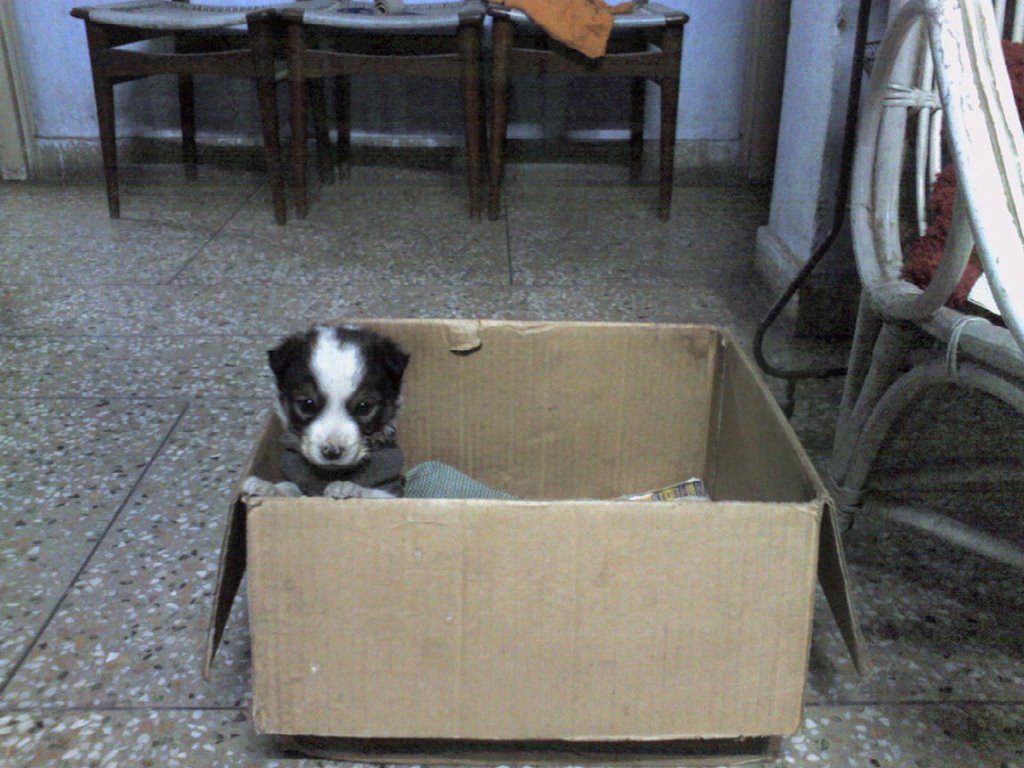
Tinkoo died on the evening of January 8, 2007. He was about one and a half months old.
Wherever he is now, I just want to thank him for loving me so much and so unconditionally and for bringing so much joy to my life, for the short period that he was with me! I also want to say sorry for not being with him when he needed me the most, for I just might have been able to do something to save him! I had gone out of town on a silly errand and he died while I was away. I wish I had not gone at all!
He had not been well for many days and was not responding well to the treatment by a veterinarian that I had been taking him to, for the past few days. I had decided to take him to another doctor and meant to do that on the very day that he died, but I had to go out of town. So, I asked my brother and mother to take him to the same veterinarian, as before, on monday and thought that I would take him to another doctor on tuesday. I had expected him to survive on that doctor's treatment for another day, but unfortunately that was not to be.
I have been contemplating revealing the identity of the veterinarian in question, in this blog entry, but am not sure if that would achieve any purpose. After all, my little Tinkoo is gone and anything I do now will not bring him back to life.
I hope God will soon give me the strength to be able to forgive all the people involved, including my own family members and even myself, who appear responsible right now for not being able to save my beloved Tinkoo!
Posted above, is Tinkoo's last photograph.
Sunday, December 31, 2006
Preserving Punjabiyat
The other day I was watching the ETC Punjabi channel on television and the Miss World-Punjaban contest, held recently in the city of Ludhiana, was on air. This was not the usual 'beauty' contest and had more to do with testing the contestants' awareness of Punjabi language and culture as well as their skills at practising folk art forms like Giddha and BoliyaaN. The dress code was also traditional throughout the various stages of the contest.
As far as I can remember, the various rounds included one based on solo-dance (traditional), a Giddha round, along with a round where each participant had to wear a bridal dress and one where each contestant had to pick a slip of paper out of each of two bowls, on one of which would be a question related to Punjabi heritage and culture for the young lady to answer and on the other would be a subject, a Boli related to which the girl would then have to recite.
By the time I turned on the television set, the Bridal-wear stage was already over and the solo-dance was in progress. Some of the participants managed to impress my mother (who was also watching) too, with their graceful movements. Others were not so good and some even seemed to have copied a few steps from dances in Bollywood movies, which was saddening. All of them danced to traditional Punjabi tunes, however.
Giddha was much better as all the participants, who had to perform together, as a group, for that is what the dance-form requires, had obviously received some help from the organisers too. It was a well-co-ordinated performance and though I am no expert, I dare say that all the girls put up a rather good show.
Also, all of them, some of whom had come from Indian states other than Punjab and some from as far away as Australia and the United States, appeared to have done their homework well for the final round and all but one participant managed to answer the questions with a fair amount of accuracy, as well as to recite the Boli that was asked of them. Some of the questions seemed fairly easy to me, while there were others the answers to which I did not know. So, I was amazed at and really admired the depth of knowledge that some of the pretty young ladies had about the rich Punjabi virsa (heritage). I was very pleasantly surprised to find out that such girls still do exist in this day and age, when most young Punjabans spend their spare time keeping up with the latest trends, fashions, television soap-operas, gossip and other such frivolous pursuits (It's not that most Punjabi young men fare any better on this count!) and I felt enormously proud of all of them!
The contestant who won the Miss World-Punjaban saggi-phull comes from Australia. I could not help noticing that she has an immensely beautiful pair of eyes. It is so difficult to notice such things, on account of the bare-dare or skin-tight outfits that most girls otherwise wear these days!
I am sure many would agree with me that the Sabhyacharak Sathh has done a highly commendable job by organising something like this. However, I think it would not only have added greatly to the prestige of the event, but also made it complete, in a way, if participation had also been secured from the Punjab that exists on the other side of the Indo-Pak border.
As far as I can remember, the various rounds included one based on solo-dance (traditional), a Giddha round, along with a round where each participant had to wear a bridal dress and one where each contestant had to pick a slip of paper out of each of two bowls, on one of which would be a question related to Punjabi heritage and culture for the young lady to answer and on the other would be a subject, a Boli related to which the girl would then have to recite.
By the time I turned on the television set, the Bridal-wear stage was already over and the solo-dance was in progress. Some of the participants managed to impress my mother (who was also watching) too, with their graceful movements. Others were not so good and some even seemed to have copied a few steps from dances in Bollywood movies, which was saddening. All of them danced to traditional Punjabi tunes, however.
Giddha was much better as all the participants, who had to perform together, as a group, for that is what the dance-form requires, had obviously received some help from the organisers too. It was a well-co-ordinated performance and though I am no expert, I dare say that all the girls put up a rather good show.
Also, all of them, some of whom had come from Indian states other than Punjab and some from as far away as Australia and the United States, appeared to have done their homework well for the final round and all but one participant managed to answer the questions with a fair amount of accuracy, as well as to recite the Boli that was asked of them. Some of the questions seemed fairly easy to me, while there were others the answers to which I did not know. So, I was amazed at and really admired the depth of knowledge that some of the pretty young ladies had about the rich Punjabi virsa (heritage). I was very pleasantly surprised to find out that such girls still do exist in this day and age, when most young Punjabans spend their spare time keeping up with the latest trends, fashions, television soap-operas, gossip and other such frivolous pursuits (It's not that most Punjabi young men fare any better on this count!) and I felt enormously proud of all of them!
The contestant who won the Miss World-Punjaban saggi-phull comes from Australia. I could not help noticing that she has an immensely beautiful pair of eyes. It is so difficult to notice such things, on account of the bare-dare or skin-tight outfits that most girls otherwise wear these days!
I am sure many would agree with me that the Sabhyacharak Sathh has done a highly commendable job by organising something like this. However, I think it would not only have added greatly to the prestige of the event, but also made it complete, in a way, if participation had also been secured from the Punjab that exists on the other side of the Indo-Pak border.
Saturday, December 23, 2006
Jee aayaaN nu (Welcome), Atif Aslam!
Atif Aslam is in town at the moment. He is to perform live at the Centre-Stage Mall in Noida tonight. Unfortunately, I will not be able to attend the concert this time. Well, may be next time!
In fact, he has been in India for a few days now. Earlier, while he was at Bombay, he appeared on a couple of shows on MTV India. I was able to catch a little bit of the conversations he had with VJ Rannvijay and VJ Anusha on MTV Super Select and MTV Chillout, respectively.
Apart from the fact that he is immensely talented musically, he seems to be quite a regular guy and a full-blooded Punjabi to boot. He also likes to ride his motorbike around and bought it with his own money, just like me. The only difference is that he owns a Honda VLX (which costs upwards of Rs.20,00,000), while I have a Yamaha RX135 (which I bought for about Rs.46,000!).
When asked about his favourite song among all that he has sung so far, he said it is 'Gal Sun Ja' from the album titled Jalpari. He also sang it live on the show, with no musical accompaniment except some light strains of his own guitar. It sounded absolutely wonderful that way and, in fact, far better than it does on the album!
I sincerely hope that some one will post the audio or video recording on the internet very soon, so that I can download it and listen to it as often as I want to.
The following video shows Atif performing the song live at the Indus Music Awards show not so long ago, obviously, with full musical accompaniment:
In fact, he has been in India for a few days now. Earlier, while he was at Bombay, he appeared on a couple of shows on MTV India. I was able to catch a little bit of the conversations he had with VJ Rannvijay and VJ Anusha on MTV Super Select and MTV Chillout, respectively.
Apart from the fact that he is immensely talented musically, he seems to be quite a regular guy and a full-blooded Punjabi to boot. He also likes to ride his motorbike around and bought it with his own money, just like me. The only difference is that he owns a Honda VLX (which costs upwards of Rs.20,00,000), while I have a Yamaha RX135 (which I bought for about Rs.46,000!).
When asked about his favourite song among all that he has sung so far, he said it is 'Gal Sun Ja' from the album titled Jalpari. He also sang it live on the show, with no musical accompaniment except some light strains of his own guitar. It sounded absolutely wonderful that way and, in fact, far better than it does on the album!
I sincerely hope that some one will post the audio or video recording on the internet very soon, so that I can download it and listen to it as often as I want to.
The following video shows Atif performing the song live at the Indus Music Awards show not so long ago, obviously, with full musical accompaniment:
Wednesday, December 20, 2006
Puppy Love
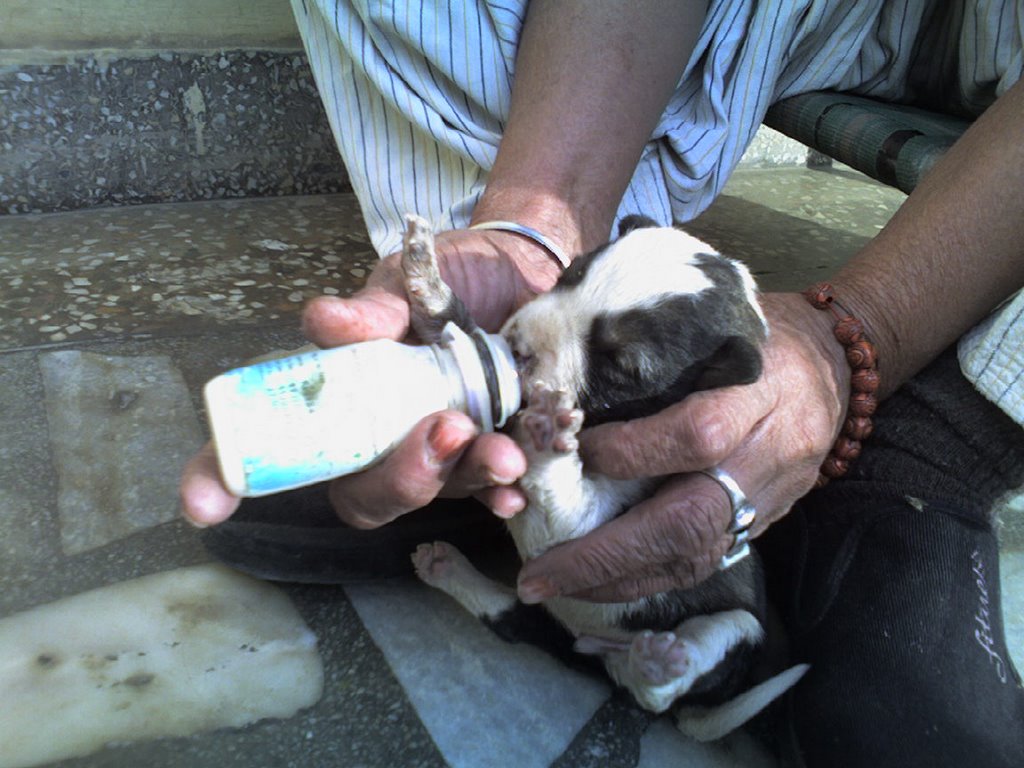
Tinkoo came to live with us a few days ago, after his mother was taken away by the employees of the municipal corporation. They were acting upon a complaint registered by some local residents, stating that the stray bitch was a threat to the local populace and tried to bite any one who tried to go near her. The complainants, of course, did not take into consideration the facts that she was acting in that manner because some urchins (of the human variety, obviously) had beaten her up with sticks very recently and that she had a very young puppy to care for.
We were out of town, when all this happened. When my mother tried to find out what had happened to Nikki (the name we had given Tinkoo's Ma), upon our return, she was given a detailed account of the sequence of events, by one of the neighbours. So, she went looking for the pup in the bush where his mother lived and came back with the little bundle of joy that my brother has christened Tinkoo.
Initially, the little one could not see anything, because he could not open his eyes (like most puppies his age) and could only manage to drag himself along the ground as his legs did not even have the strength for him to stand up straight. Gradually, he began to toddle along on his tiny feet and now tries to chase us around too. He was also able to open his eyes after the first few days and seems to be able to see well enough these days.
At first, we tried to feed him buffalo's milk (diluted with water) through a dropper, which was quite a task in itself! Now, we have acquired a feeding-bottle, through which we feed him his liquid diet about four times a day. The photograph above shows Tinkoo at supper, being helped along by my Ma.
For a good part of the afternoon and through the night, he sleeps in a cardboard box that a neighbour was kind enough to lend us. The box is lined with old newspapers and some rags (to keep him warm), which we replace when he wets those, or worse, and his inbuilt sound alarm goes off! Of late, though, he does seem to be learning to relieve himself while having an 'out-of-the-box' experience, rather than when he is resting inside.
He did give us a few anxious moments over the past three days, for something caused him to have an upset stomach and, therefore, loose motions. However, we have been giving him some medicine and he seems to be responding well to that.
He also seems to have understood the power equations in the family well enough and follows my mother around a lot more than my father or brother or I. My mother, whose writ runs unquestioned most of the time and who had earlier threatened to let him return to live where his mother did i.e. on the street, once he is old enough, has now adopted a softer line and my brother and I hope that he will be allowed to live with us for good. The two of us, on our part, have been doing whatever we can to help make that happen, in terms of cleaning up after him, feeding him whenever our Ma does not feel like doing that, etc.
Whatever else may happen, I hope that Tinkoo will have a long and happy life ahead!
Monday, December 11, 2006
The Name Is Not Enough
Over the past few weeks, the Star Movies channel had been airing James Bond movies. It started with the earliest ones starring Sean Connery, moving on to those starring George Lazenby, Roger Moore, Timothy Dalton and, finally, Pierce Brosnan as the fictional super-spy. The latest one, in which Daniel Craig has played the role of Bond, is still running in theatres and, obviously, can not be expected to appear on television until much later.
I was able to watch most of these, apart from a few that I missed on account of power cuts at my place or that of the local cable television service operator's.
On thursday, my brother and I watched the latest Bond flick i.e. Casino Royale, as well, at a local theatre.
Out of all these movies, three i.e. the two that had Timothy Dalton as Bond and the latest one that has Daniel Craig as the leading man, stand out in particular, in my opinion. While watching the two starring Dalton i.e. The Living Daylights and Licence to Kill, I was rankled slightly by the fact that Dalton's personality was not quite impressive enough, somehow, to live up to the legacy left behind by Connery and Moore, in what otherwise were rather well-made Bond movies.
Casino Royale is one I would have enjoyed watching quite a bit, had it not been a part of the James Bond marquee. Not only does Daniel Craig not appear 'suave' enough to play Bond, but he also does not seem to have the 'finesse' (that I would expect from James Bond) to carry off some of the wittier lines that the dialogue writers have given him (and it is not that he has been given too many such lines, in any case). He has plenty of 'beef-cake' in the form of muscle, but appears to be too 'working class' to play Bond. I suppose he would have to have a lot more of 'charm', to successfully essay the role. I do wish that Pierce Brosnan had been retained as 007.
Also, Bond is sloppily dressed in many parts of the movie, as compared to all the earlier ones, and especially so in the opening sequence.
Two of the major reasons for which I like to watch Bond movies, are the cars that the secret agent gets to drive and the gadgets that he gets to use in these films. This movie disappointed me partially on the first count and almost completely on the second. Bond does get to drive the Aston Martin DB5 and the new DBS (which reportedly has a 6 litre, V12 engine) in the movie, but not only are these cars not a part of any exciting chase sequences, these also do not have any interesting inbuilt gadgets except something as unexciting as a defibrillator in the glove box of the DBS. Apart from that, there is almost nothing in the movie in the name of gadgets, in addition to something as drab as a microchip implant transmitter that is injected into Bond's arm and transmits Bond's location as well as information related to Bond's medical condition to MI6 headquarters.
In fact, Bond should not have been driving the DBS at all, had this movie been produced as a prequel to all other Bond movies, considering that it is based on the first novel that Ian Fleming wrote in the series. However, this film seeks to establish a new timeline and narrative framework. That is also the reason for which Bond uses the Walther P99 as his personal weapon in the motion picture, instead of the Beretta 418 that he was supposed to use, as per the novel (Bond continued to use the Beretta, until it was replaced with the Walther PPK in 'Dr. No'). Producing a prequel would also have meant dispensing with Dame Judi Dench as 'M' and hiring a male actor for the job. These, however, are just interesting asides and I can not say whether I would have liked the movie any more than I do now, had it been produced as a prequel with the cast, crew, director and script-writer remaining the same.
One does tend to have a lot of expectations from a James Bond film.
The only aspect of the movie that does not disappoint, is the selection of the Bond-girls and Eva Green as Vesper Lynd and Caterina Murino as Solange are as gorgeous as they come!
I was able to watch most of these, apart from a few that I missed on account of power cuts at my place or that of the local cable television service operator's.
On thursday, my brother and I watched the latest Bond flick i.e. Casino Royale, as well, at a local theatre.
Out of all these movies, three i.e. the two that had Timothy Dalton as Bond and the latest one that has Daniel Craig as the leading man, stand out in particular, in my opinion. While watching the two starring Dalton i.e. The Living Daylights and Licence to Kill, I was rankled slightly by the fact that Dalton's personality was not quite impressive enough, somehow, to live up to the legacy left behind by Connery and Moore, in what otherwise were rather well-made Bond movies.
Casino Royale is one I would have enjoyed watching quite a bit, had it not been a part of the James Bond marquee. Not only does Daniel Craig not appear 'suave' enough to play Bond, but he also does not seem to have the 'finesse' (that I would expect from James Bond) to carry off some of the wittier lines that the dialogue writers have given him (and it is not that he has been given too many such lines, in any case). He has plenty of 'beef-cake' in the form of muscle, but appears to be too 'working class' to play Bond. I suppose he would have to have a lot more of 'charm', to successfully essay the role. I do wish that Pierce Brosnan had been retained as 007.
Also, Bond is sloppily dressed in many parts of the movie, as compared to all the earlier ones, and especially so in the opening sequence.
Two of the major reasons for which I like to watch Bond movies, are the cars that the secret agent gets to drive and the gadgets that he gets to use in these films. This movie disappointed me partially on the first count and almost completely on the second. Bond does get to drive the Aston Martin DB5 and the new DBS (which reportedly has a 6 litre, V12 engine) in the movie, but not only are these cars not a part of any exciting chase sequences, these also do not have any interesting inbuilt gadgets except something as unexciting as a defibrillator in the glove box of the DBS. Apart from that, there is almost nothing in the movie in the name of gadgets, in addition to something as drab as a microchip implant transmitter that is injected into Bond's arm and transmits Bond's location as well as information related to Bond's medical condition to MI6 headquarters.
In fact, Bond should not have been driving the DBS at all, had this movie been produced as a prequel to all other Bond movies, considering that it is based on the first novel that Ian Fleming wrote in the series. However, this film seeks to establish a new timeline and narrative framework. That is also the reason for which Bond uses the Walther P99 as his personal weapon in the motion picture, instead of the Beretta 418 that he was supposed to use, as per the novel (Bond continued to use the Beretta, until it was replaced with the Walther PPK in 'Dr. No'). Producing a prequel would also have meant dispensing with Dame Judi Dench as 'M' and hiring a male actor for the job. These, however, are just interesting asides and I can not say whether I would have liked the movie any more than I do now, had it been produced as a prequel with the cast, crew, director and script-writer remaining the same.
One does tend to have a lot of expectations from a James Bond film.
The only aspect of the movie that does not disappoint, is the selection of the Bond-girls and Eva Green as Vesper Lynd and Caterina Murino as Solange are as gorgeous as they come!
Monday, December 04, 2006

Wednesday, November 29, 2006
The Creamy Layer
He and I were both in the same section in the same school, in class XI. We were both studying Physics, Chemistry and Mathematics as the main subjects, besides English and Punjabi as the the auxiliary ones. Both of us were also coached by private tutors, in order to prepare us for entrance examinations for engineering courses. We even lived in the same sector in Chandigarh.
However, his father worked for the government and mine for a private company. They had their own house and we lived in rented accomodation. My father owned a beat-up, second-hand car, while his had a spanking new model. I used to go to school on a bicycle and he had a motor-bike. I asked my parents for money only when I had to buy something essential, while he used to get a lavish allowance. His father obviously managed to earn some 'extra income', being a highly-ranked official involved with granting permits, licences, etc., for which he was said to charge a certain 'fee' from those whom he 'obliged' with his signature and official rubber-stamp.
Still, my class-fellow and I were friends and visited each other's homes often, after school. We were part of the same gang and often hung out together, along with all the other guys, or went to the movies, trips to the Sukhna Lake, etc.
Two years went by, almost in a flash, and soon it was time to appear for the various competitive examinations. Over these couple of years, I realised that although I had taken up the subjects that I had, I did not really have a head for calculus or trigonometry, which was reflected in my below-average scores. Anyhow, I decided to appear for the Combined Entrance Test for admission to engineering and architechture courses in Punjab and Chandigarh (which is a Union Territory, even though it is the capital of the states of Haryana and Punjab). I was placed around 10,000 among approximately 16,000 candidates. Since there were only about 2500 seats available in all, I saw no point in filling in the admission forms.
So, I was obviously surprised when I found him filling up an admission form, even as he had been ranked around 10,500. When I asked him about it, he said his father had told him to do so and he was complying with that. It was only later that I learnt that he had been admitted to the best architecture college i.e. the one at Punjab University, Chandigarh, in the reserved quota, because he belonged to one of the Scheduled Castes.
Later, when I had earned a B.A. degree from a local college and was to leave for Indore in the state of Madhya Pradesh to pursue an M.B.A., he was in the second year of his course, having finally cleared the first year examinations after several failed attempts. It was too bad that there was no reserved quota that could have helped him clear his B.Arch. examinations, as there would have been for promotions in the (reserved) government job that would have been waiting for him as soon as he graduated, so as to ensure that he retires as a high-ranking government official!
I am reminded of all this whenever I read a news report about some politician having made a statement against the directive issued by the Supreme Court of India for excluding the 'creamy layer' i.e. the economically well-off among the Scheduled Castes, Scheduled Tribes and the Other Backward Castes from reservations in admissions to courses of higher education as well as selections for government jobs and promotions while serving therein.
However, his father worked for the government and mine for a private company. They had their own house and we lived in rented accomodation. My father owned a beat-up, second-hand car, while his had a spanking new model. I used to go to school on a bicycle and he had a motor-bike. I asked my parents for money only when I had to buy something essential, while he used to get a lavish allowance. His father obviously managed to earn some 'extra income', being a highly-ranked official involved with granting permits, licences, etc., for which he was said to charge a certain 'fee' from those whom he 'obliged' with his signature and official rubber-stamp.
Still, my class-fellow and I were friends and visited each other's homes often, after school. We were part of the same gang and often hung out together, along with all the other guys, or went to the movies, trips to the Sukhna Lake, etc.
Two years went by, almost in a flash, and soon it was time to appear for the various competitive examinations. Over these couple of years, I realised that although I had taken up the subjects that I had, I did not really have a head for calculus or trigonometry, which was reflected in my below-average scores. Anyhow, I decided to appear for the Combined Entrance Test for admission to engineering and architechture courses in Punjab and Chandigarh (which is a Union Territory, even though it is the capital of the states of Haryana and Punjab). I was placed around 10,000 among approximately 16,000 candidates. Since there were only about 2500 seats available in all, I saw no point in filling in the admission forms.
So, I was obviously surprised when I found him filling up an admission form, even as he had been ranked around 10,500. When I asked him about it, he said his father had told him to do so and he was complying with that. It was only later that I learnt that he had been admitted to the best architecture college i.e. the one at Punjab University, Chandigarh, in the reserved quota, because he belonged to one of the Scheduled Castes.
Later, when I had earned a B.A. degree from a local college and was to leave for Indore in the state of Madhya Pradesh to pursue an M.B.A., he was in the second year of his course, having finally cleared the first year examinations after several failed attempts. It was too bad that there was no reserved quota that could have helped him clear his B.Arch. examinations, as there would have been for promotions in the (reserved) government job that would have been waiting for him as soon as he graduated, so as to ensure that he retires as a high-ranking government official!
I am reminded of all this whenever I read a news report about some politician having made a statement against the directive issued by the Supreme Court of India for excluding the 'creamy layer' i.e. the economically well-off among the Scheduled Castes, Scheduled Tribes and the Other Backward Castes from reservations in admissions to courses of higher education as well as selections for government jobs and promotions while serving therein.
Tuesday, November 21, 2006
In The Line of Fire...
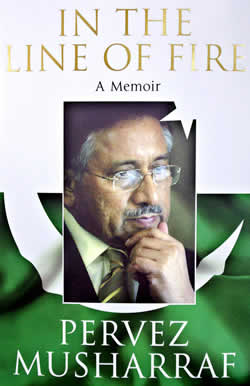
The other day I was watching the movie starring Clint Eastwood, after which General Musharraf has decided to name his book (I refrain from using the term 'memoir', for it is still not very clear as to how much of it has been written from memory and how much from pure imagination.), and it occurred to me that the character, called Frank Horrigan, played by Eastwood in the movie appears to have a lot in common with the General, at present.
Like Horrigan, the General is, or at least appears to be, at the fag end of his career. Apart from the political opposition he faces in Pakistan, serious resentment is brewing against him in the Pakistani armed forces, as is evident from the recent failed coup attempt. In any case, it is difficult to predict as to how long he will be able to remain president, once he relinquishes the top post in the military, which I think he will have to do sooner rather than later.
Also, President Mush's relationship with the US government appears to be quite analogous to the one that Eastwood's character shares with his love-interest (played by Rene Russo) in the movie, who is fascinated by him but does not quite know whether to trust his capabilities completely or not.
Besides, the oganisations that are responsible for the attempts that have been made on the former commando's life in the recent past probably mean nearly the same to him as the character played by John Malkovich did to Horrigan. This analogy may not appear to be as precise as the ones described above though, since he probably leaves it to others to review his personal security.
Meanwhile, the Hindi version of the book is titled 'Agnipath', after an Amitabh Bachchan-starrer by that name, which I have not had the opportunity to watch, so far. So, I can not say if any parallels can be drawn from there, as well.
However, even though I have no way of ascertaining whether the majority of the Pakistani people agree with him or not, for it would take nothing less than a referendum to be able to do so, Pervez Musharraf definitely does seem to think of himself as a super-star!
Monday, November 13, 2006
Tagged again...
This should be fairly simple, I suppose. All I have to do is to answer ten questions.
So, here goes:
1. Do you look at country of manufacture or quality of manufacture while buying clothes?
I do not care much for international brands any more, especially since I started making my own money.
I have been acquainted with the finest though and Van Heusen used to be my favourite brand for shirts at one point of time, courtesy my family, especially my oldest cousin, who has always been the elder sister I never had otherwise.
2. Do you make sure the clothes you buy are natural fabrics?
Since it is a pair of jeans and a full-sleeved shirt that I wear mostly, the trousers are cotton by default. The shirts are generally either pure cotton or mixed fabric, but almost never completely synthetic and that also goes for the odd pair of formal trousers (for eventualities like job-interviews) that I get stitched by the friendly neighbourhood tailor.
3. Sunglasses, fashion or protection?
I never wear sunglasses.
4. If you were a dog, would you bark or bite?
I can not say for sure, though being able to scratch my ears using my feet sounds like a rather exciting prospect!
5. Do you turn your cell-phone off before going to sleep?
No, I do not.
6.You came home from outside and have an hour to kill before going out again to meet a friend. What is the most probable thing which you will do in that hour?
I suppose I will either read a newspaper or a magazine or watch television or surf the internet, or a little bit of all that.
7. What’s you favourite state of chocolate, liquid or solid?
The one that is more easily available at any particular point of time, is my favourite state of chocolate at that point of time.
8. What would you choose a noticeable pay hike or noticeable improvement in work environment?
The latter, if both are not possible at the same time.
9. What do you enjoy more… staying indoors with friends talking meaningfully or hanging around outdoors with friends?
It all depends on the weather (No point going out in the rain, you see!), though I do not quite know what to make of the 'meaningfully' part.
10. If all the music artists come to a deliberate agreement to perform their last concert on the same day, whose concert will you attend?
Nobody's!
I will catch all my favourite artistes' concerts on television re-runs, later.
So, here goes:
1. Do you look at country of manufacture or quality of manufacture while buying clothes?
I do not care much for international brands any more, especially since I started making my own money.
I have been acquainted with the finest though and Van Heusen used to be my favourite brand for shirts at one point of time, courtesy my family, especially my oldest cousin, who has always been the elder sister I never had otherwise.
2. Do you make sure the clothes you buy are natural fabrics?
Since it is a pair of jeans and a full-sleeved shirt that I wear mostly, the trousers are cotton by default. The shirts are generally either pure cotton or mixed fabric, but almost never completely synthetic and that also goes for the odd pair of formal trousers (for eventualities like job-interviews) that I get stitched by the friendly neighbourhood tailor.
3. Sunglasses, fashion or protection?
I never wear sunglasses.
4. If you were a dog, would you bark or bite?
I can not say for sure, though being able to scratch my ears using my feet sounds like a rather exciting prospect!
5. Do you turn your cell-phone off before going to sleep?
No, I do not.
6.You came home from outside and have an hour to kill before going out again to meet a friend. What is the most probable thing which you will do in that hour?
I suppose I will either read a newspaper or a magazine or watch television or surf the internet, or a little bit of all that.
7. What’s you favourite state of chocolate, liquid or solid?
The one that is more easily available at any particular point of time, is my favourite state of chocolate at that point of time.
8. What would you choose a noticeable pay hike or noticeable improvement in work environment?
The latter, if both are not possible at the same time.
9. What do you enjoy more… staying indoors with friends talking meaningfully or hanging around outdoors with friends?
It all depends on the weather (No point going out in the rain, you see!), though I do not quite know what to make of the 'meaningfully' part.
10. If all the music artists come to a deliberate agreement to perform their last concert on the same day, whose concert will you attend?
Nobody's!
I will catch all my favourite artistes' concerts on television re-runs, later.
Tuesday, November 07, 2006
Reservation is an insult...
As I tuned into a news telecast the other day, Sonia Gandi was making a speech.
"Mujhe Lalu Prasad Yadav ko banaana hai." (I have to fool Lalu Prasad Yadav.)
"Mujhe Dr. Karunanidhi ko banaana hai." (I have to fool Dr. Karunanidhi.)
I can very well understand that coalition politics has its own compulsions, but this seemed rather too audacious by any standards, considering that this was a speech being made in public and was sure to be reported prominently in all kinds of news media.
It was a little later, however, when the correspondent elaborated on what Mrs. Gandhi had been alluding to, that I realised that she had, in fact, been saying:
"Mujhe Lalu Prasad Yadav ko manaana hai." (I have to persuade Lalu Prasad Yadav.)
"Mujhe Dr. Karunanidhi ko manaana hai." (I have to persuade Dr. Karunanidhi.)
I suppose that means that either I am beginning to go deaf or Sonia Gandhi and Hindi do not go too well together! Anyway, that is besides the point.
Apparently, Mrs. Gandhi hopes to persuade the Congress' allies in the coalition that runs the government of India, to support a proposed bill that is meant to reserve a certain percentage of seats in parliament for women.
I think it is an insult to the women of India to imply that they can not 'secure adequate representation' in parliament unless this is done. I am sure they are as capable or incapable of making it to the Lok Sabha (the lower house) or the Rajya Sabha (the upper house) as the men are, on their own steam.
Female politicians in the country including the dour, the manipulative, the foul-mouthed, the feisty, the corrupt and ruthless, the hard working and competent, the benevolent and socially active, the erudite, the brilliant orator and the extreme right-wing and radically divisive, come in different shapes and sizes and have different temperaments, ideologies and modus operandi. So, I believe it is fair enough to say that they are as good or bad at politics as their male counterparts.
Besides, I do not see why only women can represent women and only men can represent men in parliament, as the proposed bill appears to imply.
After having sought to divide society along the lines of caste through caste-based reservations in government jobs and admissions to educational institutions (including highly technical courses) and therefore having insulted the brilliant, the hard-working and the competent among the so-called Other Backward Castes (OBCs), the political class now seek to polarise society even further by bringing in such legislation.
I really have no idea where this ever-expanding quest for 'vote-banks' is going to lead to.
"Mujhe Lalu Prasad Yadav ko banaana hai." (I have to fool Lalu Prasad Yadav.)
"Mujhe Dr. Karunanidhi ko banaana hai." (I have to fool Dr. Karunanidhi.)
I can very well understand that coalition politics has its own compulsions, but this seemed rather too audacious by any standards, considering that this was a speech being made in public and was sure to be reported prominently in all kinds of news media.
It was a little later, however, when the correspondent elaborated on what Mrs. Gandhi had been alluding to, that I realised that she had, in fact, been saying:
"Mujhe Lalu Prasad Yadav ko manaana hai." (I have to persuade Lalu Prasad Yadav.)
"Mujhe Dr. Karunanidhi ko manaana hai." (I have to persuade Dr. Karunanidhi.)
I suppose that means that either I am beginning to go deaf or Sonia Gandhi and Hindi do not go too well together! Anyway, that is besides the point.
Apparently, Mrs. Gandhi hopes to persuade the Congress' allies in the coalition that runs the government of India, to support a proposed bill that is meant to reserve a certain percentage of seats in parliament for women.
I think it is an insult to the women of India to imply that they can not 'secure adequate representation' in parliament unless this is done. I am sure they are as capable or incapable of making it to the Lok Sabha (the lower house) or the Rajya Sabha (the upper house) as the men are, on their own steam.
Female politicians in the country including the dour, the manipulative, the foul-mouthed, the feisty, the corrupt and ruthless, the hard working and competent, the benevolent and socially active, the erudite, the brilliant orator and the extreme right-wing and radically divisive, come in different shapes and sizes and have different temperaments, ideologies and modus operandi. So, I believe it is fair enough to say that they are as good or bad at politics as their male counterparts.
Besides, I do not see why only women can represent women and only men can represent men in parliament, as the proposed bill appears to imply.
After having sought to divide society along the lines of caste through caste-based reservations in government jobs and admissions to educational institutions (including highly technical courses) and therefore having insulted the brilliant, the hard-working and the competent among the so-called Other Backward Castes (OBCs), the political class now seek to polarise society even further by bringing in such legislation.
I really have no idea where this ever-expanding quest for 'vote-banks' is going to lead to.
Wednesday, November 01, 2006
Abode of Love
The blog entry titled 'Abode of Love' that I have linked to here, describes the rich cultural and architectural heritage of, as well as the present state of affairs at the town of Malka Hans in Pakistani Punjab, where Waris Shah (the legendary Sufi saint and Punjabi poet) is said to have composed his magnum opus i.e. his version of the immortal love tragedy Heer-Ranjha, in 1766.
His version is widely regarded as being the most popular, among some 76 known ones. As the poet Mohammad Ilyas has rightly said:
Khabar pal tey naa ik saah di ey
Ajab kheyD us beparwaah di ey
Heer Ranjhyaa teri naa ho saki,
Heer ho gayi Waris Shah di ey
(It is a strange, Divine play that no one is definite about the next moment in life. O Ranjha, instead of you, Heer has been named after Waris Shah.)
During the trip to Pakistan in April, I had the good fortune of being able to buy, at Hasan Abdal, a set of books containing selected verses by famous Sufi saints including Waris Shah, Bulleh Shah, Sultan Bahu, Mian Mohammad Baksh, Baba Farid and Shah Hussain.
Not only do I find Punjabi poetry by the Sufis to be a very engrossing read, but I am very often also able to connect it with my experiences in daily life.
The author of the books is Professor Saeed Ahmad Farani, who, I believe, also writes a regular column that is published at the website of the Academy of the Punjab in North America (a non-religious and non-political organisation that is making a highly commendable effort towards promoting Punjabi language, literature and culture.).
A remarkable coincidence was that the good professor was present at the book-stall at Hasan Abdal, while I was making the purchase and my father was able to exchange a few words with him. He came across as a very humble man who does not seek fame or fortune, but only to serve his mother tongue to the best of his abilities. May the Almighty bless him with a long life!
As Waris Shah has declared:
Waris Shah oh sadaa ee jewNdey neyN
JehnaaN keetiyaaN neyk kamaaiyaaN nee
(Waris Shah! Those who perform good deeds shall receive eternal life.)
His version is widely regarded as being the most popular, among some 76 known ones. As the poet Mohammad Ilyas has rightly said:
Khabar pal tey naa ik saah di ey
Ajab kheyD us beparwaah di ey
Heer Ranjhyaa teri naa ho saki,
Heer ho gayi Waris Shah di ey
(It is a strange, Divine play that no one is definite about the next moment in life. O Ranjha, instead of you, Heer has been named after Waris Shah.)
During the trip to Pakistan in April, I had the good fortune of being able to buy, at Hasan Abdal, a set of books containing selected verses by famous Sufi saints including Waris Shah, Bulleh Shah, Sultan Bahu, Mian Mohammad Baksh, Baba Farid and Shah Hussain.
Not only do I find Punjabi poetry by the Sufis to be a very engrossing read, but I am very often also able to connect it with my experiences in daily life.
The author of the books is Professor Saeed Ahmad Farani, who, I believe, also writes a regular column that is published at the website of the Academy of the Punjab in North America (a non-religious and non-political organisation that is making a highly commendable effort towards promoting Punjabi language, literature and culture.).
A remarkable coincidence was that the good professor was present at the book-stall at Hasan Abdal, while I was making the purchase and my father was able to exchange a few words with him. He came across as a very humble man who does not seek fame or fortune, but only to serve his mother tongue to the best of his abilities. May the Almighty bless him with a long life!
As Waris Shah has declared:
Waris Shah oh sadaa ee jewNdey neyN
JehnaaN keetiyaaN neyk kamaaiyaaN nee
(Waris Shah! Those who perform good deeds shall receive eternal life.)
Subscribe to:
Posts (Atom)

 Posts
Posts


 www.HyperSmash.com
